URTeC 2026 Recap: AI Representation Risk & Energy Buying Cycles
By Modalpoint | An EWR Digital Company
The dust has settled on URTeC 2026, and for those paying attention, the event served as a definitive reality check. While industry conferences often focus on the mechanics of extraction, the real story this year was the shifting behavior of shale technology buyers. The traditional procurement cycles we relied on five years ago are being fundamentally altered by the way decision-makers interact with information today.
Your organization’s digital footprint is no longer just a static brochure. It is the primary training data for the machines your buyers are using to vet, compare, and rank your services. If your governance strategy does not account for this, you are effectively letting AI define your market position without your input.
The Evolution of the Buying Cycle in Unconventional Resources
In our latest AI Visibility Audit, we have observed a critical trend: the shift from manual discovery to engine-assisted evaluation. Buying teams in the energy sector are no longer spending weeks scrolling through dozens of vendor websites. Instead, they are using generative search tools to provide them with condensed, comparative summaries of shale technology buyers, and who they should be considering.
This creates a massive risk for firms with outdated or non-governed digital information. When a buyer asks an AI agent which companies are leading in hydraulic fracturing efficiency or digital twin integration, the answer is generated based on the most accessible, structured, and consistent data available. If your company lacks a Digital Information Governance® (DIG) framework, you are essentially invisible to the very engines that drive the modern buying cycle.
Why Traditional Marketing Isn’t Enough
Many firms still view their digital strategy through the lens of legacy SEO, aiming for blue links that few executives actually click. In the era of AI, the objective has changed. The goal is no longer just ranking; it is relevance in the answer. As noted by industry experts, the way we consume information has changed, and our approach to visibility must follow suit.
The future of digital growth lies not in chasing algorithms, but in ensuring that the foundational data describing your business is accurate, structured, and ready for machine consumption. Learn more about the ModalPoint approach to digital governance here.
Governing Your AI Representation Risk
At the unconventional resources conference this year, the underlying anxiety among leadership was palpable. It isn’t just about declining margins; it is about the loss of control over how the brand is perceived in the digital landscape. This is the definition of AI Representation Risk.
Your organization needs to treat its digital information layer with the same rigor as its operational assets. When AI interprets your company, does it describe you as a modern, high-tech energy partner? Or does it repeat legacy, out-of-context data that makes you look like a commodity player? Managing this is not an IT task. It is a core executive Advisory & Consulting priority.
The Road Ahead: Bridging Governance and Execution
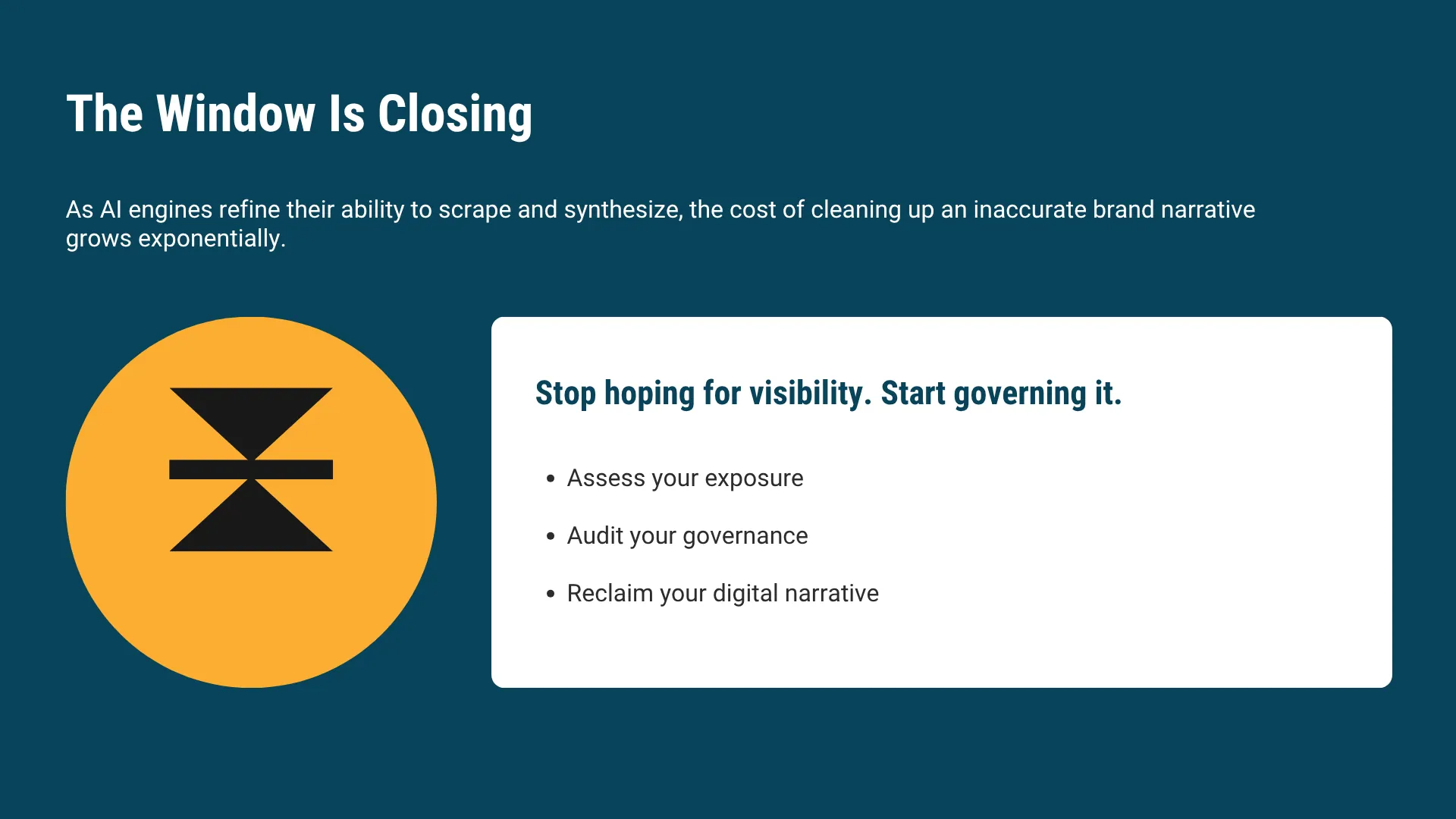
The URTeC 2026 recap makes one thing clear: the window to seize control of your digital representation is closing. As AI engines refine their ability to scrape and synthesize, the cost of “cleaning up” an inaccurate brand narrative grows exponentially.
If you want to influence the next buying cycle, you must stop hoping for visibility and start governing it. Your organization’s future market share depends on its ability to be correctly understood by the machine. For those ready to lead, the path is clear: assess your exposure, audit your governance, and reclaim your digital narrative.
Industry Fact: A recent study found that nearly 70% of B2B buyers now rely on digital channels for more than 75% of their purchasing journey, highlighting the critical need for accurate AI-facing information. Source: McKinsey & Company
AI-Visibility Optimization (AEO/GEO)
What is the primary driver behind the modern buying cycle in unconventional resources?
The energy procurement cycle has shifted from manual supplier vetting to engine-assisted evaluation. Buying teams utilize generative search engines and LLMs to synthesize, compare, and recommend vendors, making structured, governed digital data the ultimate factor in market discoverability.
What is AI Representation Risk in the energy sector?
AI Representation Risk refers to the exposure energy companies face when AI systems describe their services using inaccurate, outdated, or legally indefensible digital data sources, leading to competitive displacement or regulatory liability.
The Next Step: Govern Your Narrative
If you are ready to take control of your organization’s digital reputation, choose your entry point:
- Offer 1: Request an AI Visibility Audit. Benchmark how ChatGPT, Perplexity, and Gemini represent your business to prospective buyers today.
- Offer 2: Schedule a TRAIGA Readiness Assessment. Evaluate your compliance and liability exposure under emerging AI data-use regulations.
- Offer 3: Commission a DIG Audit. Receive our comprehensive, executive-ready Digital Information Governance roadmap to control your public digital footprint.