Content Governance for Regulated Industries
By Matthew Bertram | EWR Digital
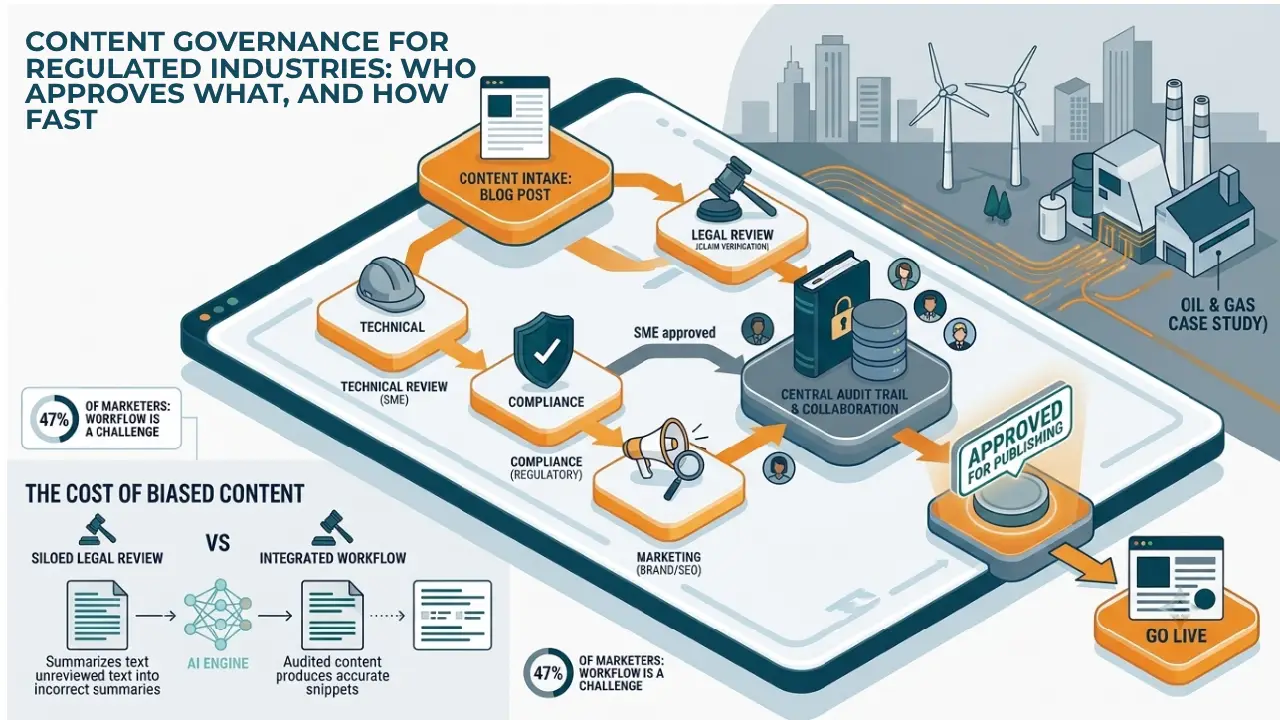
In a regulated business, a single blog post can touch marketing, legal, compliance, and sometimes an outside regulator before it ever goes live. That is the reality of content governance regulated industries teams live with every day. Without a clear structure for who reviews what and how quickly, simple content decisions turn into weeks-long standoffs, and the organization ends up choosing between speed and safety instead of getting both.
This guide breaks down what a working approval structure looks like, why oil and gas companies face a uniquely layered version of this problem, and how to build a compliance content workflow that protects the organization without stalling publishing.
Why Content Governance Matters More in Regulated Industries
Unregulated companies can publish a blog post the same day it is written. Regulated companies cannot, and for good reason. Claims about safety, environmental impact, financial performance, or legal exposure carry consequences that go far beyond a bounce rate. A poorly worded statement on a legal, energy, or life sciences site can become evidence in litigation, a regulatory citation, or a misleading claim that AI tools repeat and amplify across search results.
That last point matters more every year. AI systems now summarize and repurpose organizational content automatically, which means an unreviewed claim does not stay contained to one page. It gets pulled into answer engines and third-party summaries where the original context and disclaimers are often stripped away. Strong content governance is no longer just a legal safeguard. It is how an organization controls its own narrative in an AI-first search environment.
The Real Cost of a Broken Compliance Content Workflow
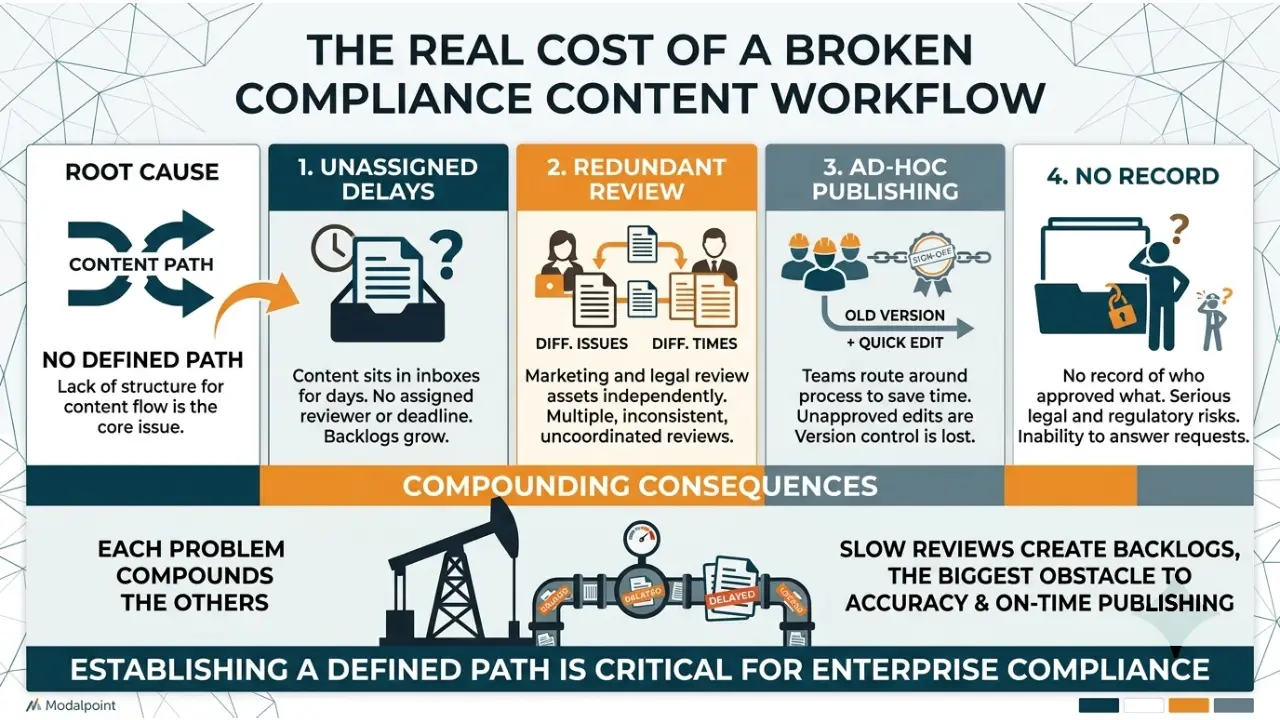
Most organizations do not lack reviewers. They lack a defined path for content to travel through. Without a compliance content workflow in place, a few predictable problems show up:
- Content sits in someone’s inbox for days with no assigned reviewer or deadline.
- Marketing and legal review the same asset independently, catching different issues at different times.
- Teams route around the process, publishing an old, previously approved version with a quick edit instead of waiting for new sign-off.
- There is no record of who approved what, which becomes a serious problem if a regulator ever asks.
Each problem compounds the others. A slow review on one asset delays the next one in the queue, and the backlog itself becomes the biggest obstacle to getting accurate content published on time.
Oil & Gas Content Approval: A Case Study in Complexity
Few industries illustrate this challenge better than energy. Oil & gas content approval routinely involves technical accuracy review from engineering or operations, environmental and safety language review, legal review for liability exposure, and communications review for brand consistency, often across multiple business units and jurisdictions.
Who Typically Touches the Content
A single blog post, such as one on a new drilling technique or a safety incident response, might pass through a subject matter expert, a health, safety, and environmental reviewer, in-house counsel, and a communications lead before publication. Larger organizations may also loop in investor relations when content touches financial or operational risk.
Where the Bottlenecks Actually Form
The bottleneck is rarely any single reviewer. It is the absence of a defined sequence. When legal and technical review happen in parallel without coordination, conflicting edits arrive at different times and someone has to reconcile them manually. When review happens strictly in sequence with no deadlines attached, one slow reviewer can hold an entire content calendar hostage.
Building a Content Governance Framework That Does Not Slow You Down
A workable framework does not eliminate review. It makes review predictable. Three components do most of the work.
Define Approval Tiers by Content Risk
Not every asset carries the same risk, so not every asset needs the same review. A social repost of an already-approved statistic does not need the scrutiny of a new claim about safety performance or regulatory compliance. Tiering content by risk lets low-risk assets move quickly while reserving full legal review for the content that actually needs it.
Set Review SLAs by Content Type
Every reviewer stage should have a stated turnaround time, whether that is 48 hours for a blog post or 24 hours for a time-sensitive update. Without a deadline attached, review requests default to whatever priority the reviewer’s own workload allows.
Centralize the Audit Trail
Every approval, comment, and revision should live in one system rather than scattered across email threads. This is what makes an organization defensible when a regulator asks who approved a specific claim and when.
Structured approval workflows prevent assets from being published without completing the required review sequence.
Lytho
Who Approves What: A Practical Structure for Regulated Content
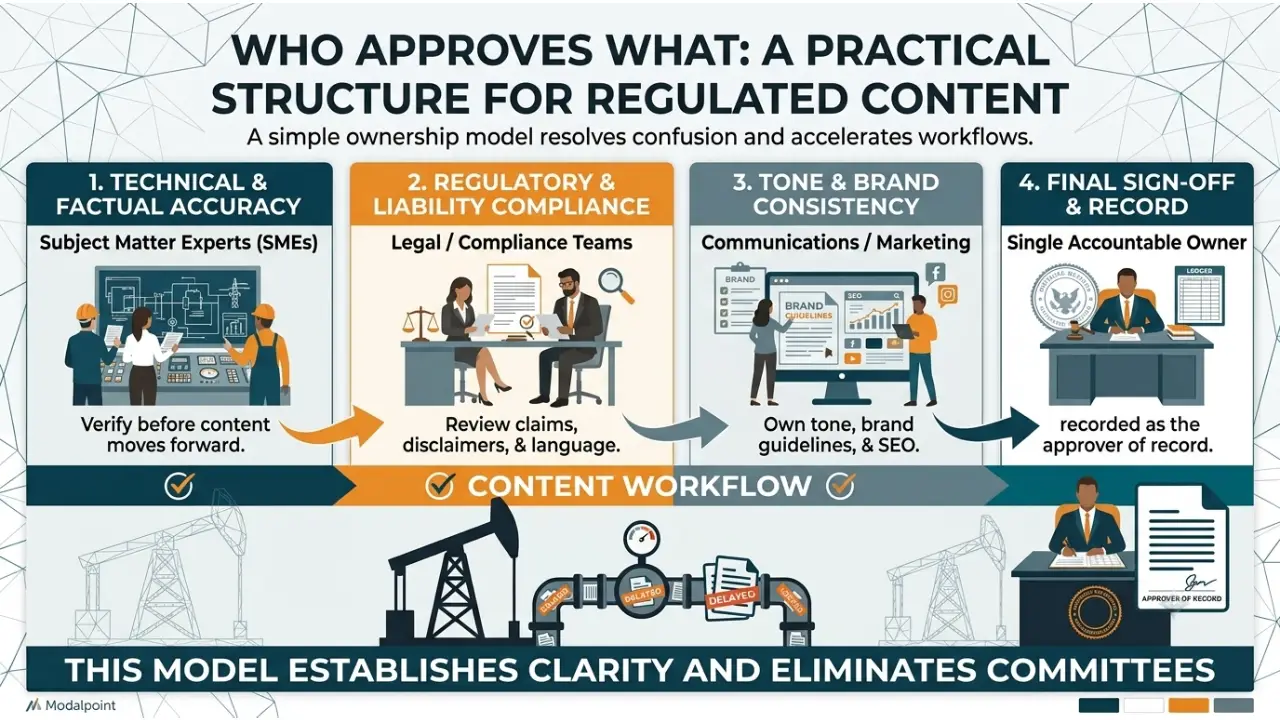
A simple ownership model resolves most of the confusion that slows regulated teams down:
- Subject matter experts verify technical or factual accuracy before anything moves forward.
- Legal or compliance reviews claims, disclaimers, and language that carries liability exposure.
- Communications or marketing owns tone, brand consistency, and SEO structure.
- A single accountable owner, not a committee, gives final sign-off and is recorded as the approver of record.
The goal is not more reviewers. It is fewer ambiguous handoffs. An AI visibility audit can help surface where existing content already lacks clear ownership or contains unverified claims, which gives compliance and marketing teams a concrete starting point rather than a blank page.
How Fast Should Approval Really Take?
There is no single universal timeline, but organizations that manage this well generally target 48 to 72 hours for standard blog and web content, 24 hours or less for time-sensitive updates, and a defined escalation path when a reviewer cannot meet the deadline. The specific numbers matter less than having numbers at all. A workflow without a target speed will always expand to fill whatever time is available.
People Also Ask
What is content governance in a regulated industry?
Content governance in a regulated industry is the set of rules, roles, and workflows that determine who reviews, approves, and is accountable for published content, ensuring it meets legal, regulatory, and brand standards before it goes live.
Why does oil and gas content need extra approval steps?
Oil and gas content often includes technical, environmental, safety, and financial claims that carry regulatory and legal exposure, which is why it typically requires review from subject matter experts, legal counsel, and compliance staff in addition to standard marketing review.
How long should a compliance content workflow take?
Most well-run compliance content workflows target 48 to 72 hours for standard content and 24 hours or less for urgent updates, with a clear escalation process for anything that risks missing the deadline.
A defined, well-documented approval structure is not a constraint on marketing speed. It is what allows a regulated organization to move quickly and confidently, knowing exactly who checked what before it reached the public, and exactly what an AI system, a regulator, or a customer will find when they go looking. Organizations that want a clear picture of how their existing content is governed, and where it is exposed, can start with ModalPoint.