Energy Tech Providers: Build 2026 Credibility in Oil & Gas
By Matthew Bertram | EWR Digital
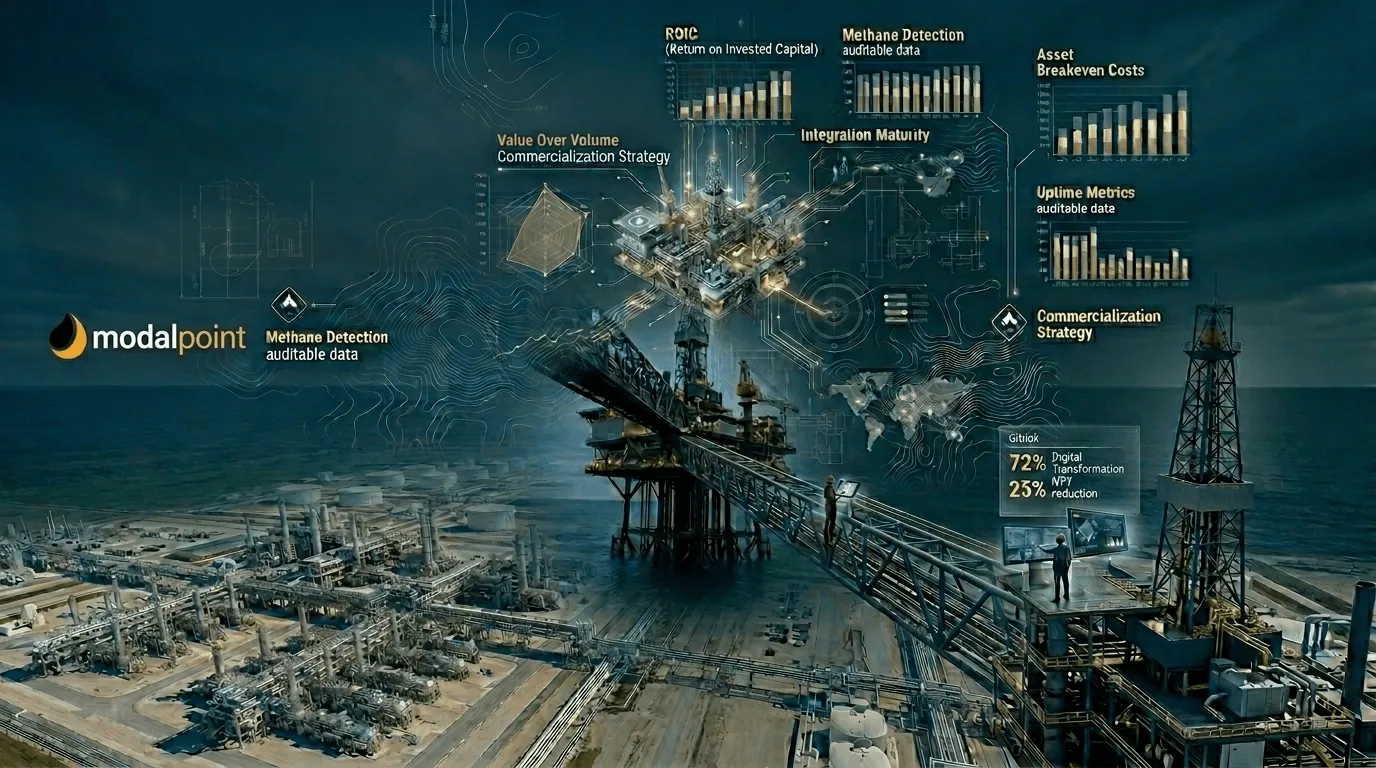
2026 Reality Check: The era of “growth at all costs” in the oilfield is dead. In 2026, the industry is not chasing production records; it is chasing ROIC (Return on Invested Capital). If your sales deck still leads with “innovation” instead of “integration maturity” or “capital discipline,” you are not just behind the curve; you are invisible to the people who sign the checks.
For energy tech providers, the challenge is not a lack of data; it is a lack of context. We are currently drowning in a sea of AI-generated “slop” that promises to “transform” operations without understanding the difference between a Tier 1 basin and a legacy play. To build credibility today, you must move past generalist marketing and start speaking the language of the asset manager.
The Death of Sameness: Why Generalist Marketing Fails in 2026
The biggest threat to energy technology oil gas adoption is not a competitor; it is “procurement purgatory.” This is where promising technologies go to die because the marketing failed to bridge the gap between a “cool feature” and a “commercial outcome.” Generalist agencies love words like disruptive and game-changing. In the real world of Upstream and Midstream operations, those words are red flags for “untested and risky.”
Building authority requires a shift toward oilfield technology marketing that prioritizes high-context, research-backed assets. Your content must demonstrate that you understand the structural constraints of 2026: labor scarcity, tightening methane regulations, and the rising cost of technical debt. When everyone is using the same AI prompts to generate the same blog posts, the provider who offers “rubber hits the road” execution strategy is the one who wins the contract.
“The challenge today is not access to AI, nor skepticism about its relevance. It is how to harness AI deliberately, focusing on the right use cases, deploying them at scale, and tying them to measurable outcomes such as cost reduction, productivity gains, and operational resilience.” Inverto, Energy Procurement Trends 2026
How Energy Tech Providers Can Bypass Procurement Purgatory
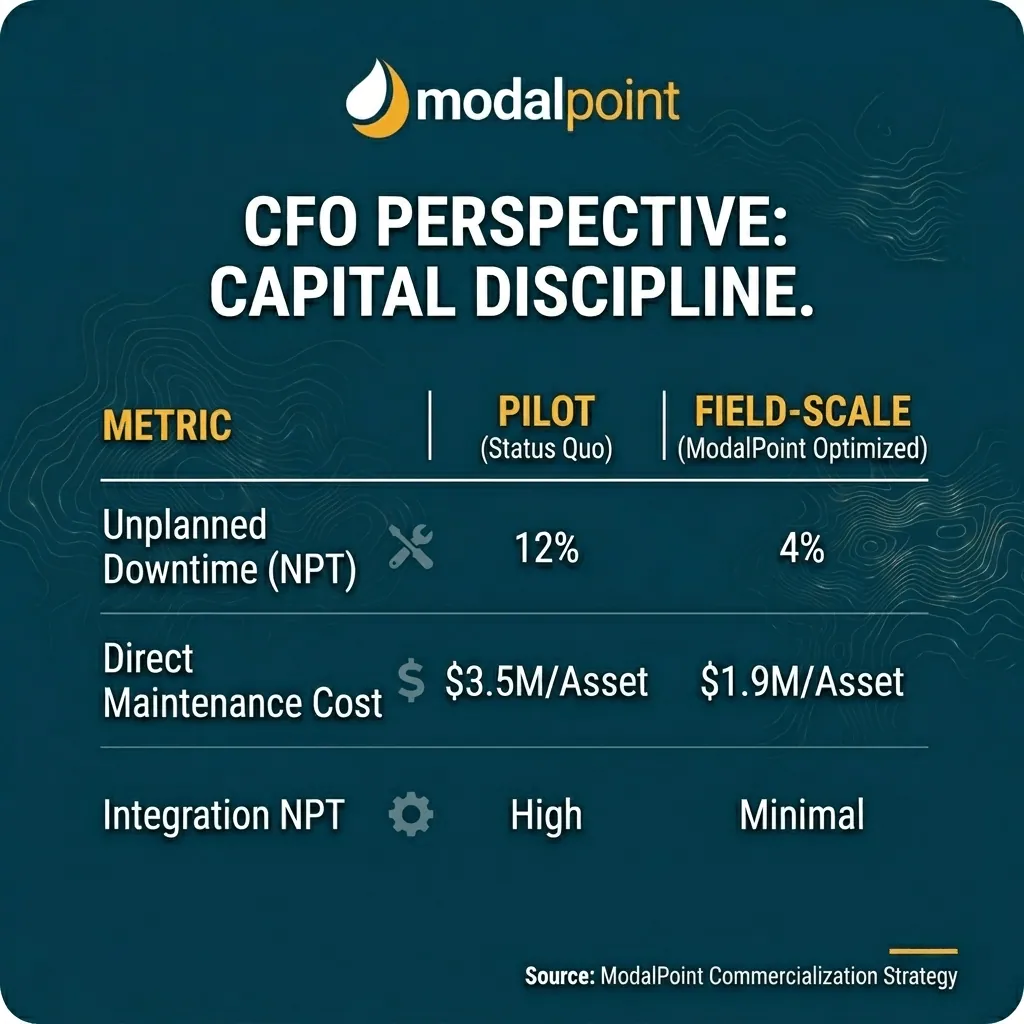
To win the business of a CFO or a VP of Operations, your narrative must be stakeholder-specific. You cannot send the same whitepaper to a CTO that you send to an ESG Officer. Each has a different “North Star” metric that dictates their budget allocation. In the 2026 market, the decision-making unit has expanded, and a “one-size-fits-all” pitch deck is a one-way ticket to a deferred decision.
1. Target the CFO with Capital Discipline
The CFO is the ultimate gatekeeper of energy tech providers. In 2026, the CFO is focused on value over volume. They do not care that your sensor has a 99% uptime if the cost to integrate it into their existing Digital Twin exceeds the projected ROIC. Your content should focus on breakeven costs and how your solution lowers the lifting cost per barrel. High-authority content for this persona should include financial modeling and case studies that highlight “Value over Volume” rather than just technical specs.
2. Speak the CTO’s Language of Integration Maturity
The IT/OT convergence is no longer a goal; it is a requirement. Energy tech providers must prove that their solutions are “secure by design.” Focus your technical briefs on API compatibility, edge modernization, and how your hardware handles the bandwidth constraints of remote locations without creating new cybersecurity vulnerabilities. The CTO is looking for “Integration Maturity.” They want to know that your tool will not become another isolated data silo that requires a custom integration project every time the enterprise software updates.
3. Address the ESG Officer’s Reporting Burden
With the expansion of carbon border adjustment mechanisms and stricter methane detection mandates, the ESG Officer needs high-fidelity data. They are not looking for “green” marketing; they need auditable, real-time emissions analytics that can be plugged directly into their sustainability reporting frameworks. If your energy technology oil gas solution can automate the collection of Scope 1 and Scope 2 emissions data, you are solving a massive compliance headache for them. Position your solution as a tool for “Regulatory Readiness” rather than just environmental stewardship.
The Waterfall Content Strategy: Engineering Authority
Stop producing random acts of content. High-authority oilfield technology marketing follows a “Waterfall” structure. It starts with a Pillar Asset (something heavy, researched, and proprietary) and cascades down into bite-sized, high-impact visibility snippets. This ensures that every piece of content you produce is connected to a larger, authoritative narrative.
- The Pillar Asset: An Industry Report on something specific, like “The Impact of Agentic AI on Midstream Integrity Management.” This asset establishes you as the “Independent Insider” who knows things the generalist agencies do not.
- Solution Briefs: One-page documents that translate that report into specific wins for the Upstream or Service segments. These briefs should be designed for quick reading by busy Field Operations Managers.
- LLM Visibility (GEO) Snippets: Short, factual Q&A sections optimized for AI search. For example, “What is the average ROIC for digital twin adoption in the Permian Basin?” By providing a direct answer, you increase the chances that a search engine’s AI Overview will cite your brand as the source.
- Offline Credibility: Take the core insights from your Pillar Asset and discuss them on the Oil and Gas Global Network (OGGN). This builds a bridge between digital presence and offline reputation, which is critical in an industry built on trust and handshakes.
Optimizing for the AI-First Search Landscape (GEO)
In 2026, a significant portion of your “reads” are not coming from humans; they are coming from LLMs (Large Language Models) summarizing your content for executives. If your site is full of vague “fluff,” the AI will ignore you or, even worse, hallucinate your capabilities. To rank in Google’s AI Overviews and Featured Snippets, you must use clear, structured formatting that allows AI scrapers to easily categorize your data.
Use tables to compare data, bullet points for process steps, and bold text for key industry drivers. For example, instead of saying “our software helps with maintenance,” use a table showing the reduction in “unplanned downtime” versus “preventative maintenance costs.” This is the data density that 2026 search engines crave. Additionally, focus on “Generative Engine Optimization” (GEO) by answering specific industry questions directly in your content. If you are a leader in energy technology oil gas, you should have dedicated sections that answer “People Also Ask” queries like “How does edge computing reduce latency in offshore drilling?”
Market Segments and Vertical Alignment
Every piece of content you produce must be vertically aligned. A solution for the Downstream refinery environment is fundamentally different from a solution for a Service company managing a fleet of pressure pumping trucks. If you do not specify the segment, you are not an expert; you are a generalist. Vertical alignment means understanding the specific pain points of a Drilling Engineer versus a Pipeline Integrity Manager. When you write about “Operational Efficiency,” you must define what that means for that specific segment, such as “Non-Productive Time” for Upstream or “Throughput Optimization” for Midstream.
Establishing Commercialization Strategy over “Marketing”
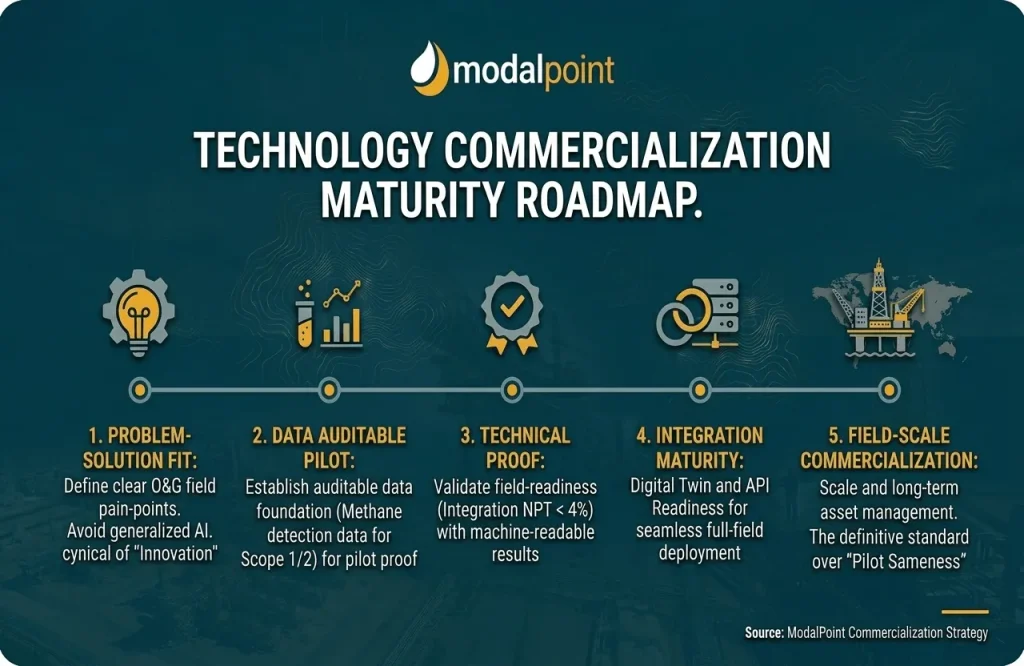
Credibility in the oilfield is not bought; it is earned through demonstrated competence. Most energy tech providers fail because they treat marketing as a support function rather than a “commercialization strategy.” A true commercialization strategy looks at the entire lifecycle of the technology, starting from the initial “Problem-Solution Fit” and moving through the long-term “Scale and Integration” phase. Your content should reflect this maturity. Move away from the “look at us” style of marketing and move toward “here is the roadmap for your success.”
This approach involves being cynical of “innovation” for its own sake. In 2026, the industry has seen too many “pilot projects” that never reached full-scale deployment. By acknowledging the “Death of Sameness” and the failure of generalist AI content, you position your brand as the one that actually understands the complexities of the field. You are not just providing a tool; you are providing an advisory layer that helps the client navigate the shifting landscape of the 2026 energy market.
The Role of Data-Driven Storytelling
High-authority marketing is essentially data-driven storytelling. You take raw technical data (the stuff that usually sits in a dusty spreadsheet) and you turn it into a narrative that a CEO can use to justify a multi-million dollar investment. This requires a “precision of a data scientist” combined with the “grit of an oilfield veteran.” You must be able to talk about API architecture in one breath and the realities of a 110-degree day in West Texas in the next. That is the duality that creates true credibility for energy tech providers.
Leveraging Industry Networks for Reputation Amplification
Visibility is not just about SEO; it is about “Reputation Amplification.” In 2026, the most successful energy tech providers are those who are active within the industry’s most influential circles. This includes participating in technical committees, speaking at industry conferences like ADIPEC or OTC, and contributing thought leadership to specialized platforms. When you tie your brand back to established networks like the American Petroleum Institute (API) or the OGGN, you are borrowing the credibility of those institutions while building your own.
This “offline-to-online” strategy ensures that when a procurement officer Googles your name after a conference, they find a consistent, high-authority digital footprint. They should see the same level of expertise in your blog posts as they heard in your keynote speech. This consistency is what builds the trust necessary to move past the initial RFP stage and into a long-term partnership.
Strategic Integration: The Path Forward
To truly build authority, your marketing must be as engineered as your software. This means moving away from vanity metrics (likes and shares) and toward commercial metrics (pipeline velocity and contract size). Every piece of content should serve as a brick in a “fortress of credibility.” If you are writing about IoT, do not just talk about connectivity; talk about the “integration maturity” required to handle 10,000 data points per second in a subsea environment. This level of detail proves that you have “been there and done that,” which is the only currency that matters in 2026.
Furthermore, your content must be optimized for “Search Generative Experiences.” This means providing definitive answers to complex problems. For example, instead of offering a vague “benefit of cloud computing,” provide a breakdown of how cloud-native architectures reduce data latency for remote drilling crews. By providing the high-fidelity data that LLMs use to generate their answers, you ensure that your brand remains the primary source of truth in a digital-first market.
Moving from Vendor to Partner
The transition from a “vendor” to a “Content & Brand Authority” happens when you stop selling tools and start selling commercialization strategies. The 2026 energy market is too complex for simple sales pitches. It requires a partner who understands the “rubber hits the road” execution of the oilfield. By focusing on high-context assets, stakeholder-specific narratives, and AI-visible formatting, energy tech providers can finally break through the noise of AI slop.
Do not let your technology get lost in the sea of sameness. Build a brand that represents the advisory layer of the industry: precise, authoritative, and outcome-obsessed. Your goal is to be the first name that comes to mind when an executive asks, “Who actually understands how to integrate this into our operations?” That is the ultimate measure of credibility in the modern oil and gas market. Start your journey toward high-authority status today with ModalPoint.
Industry Insight 2026:
Digital transformation initiatives have become a top priority for 72% of oil and gas executives, with the global market for these technologies projected to reach $32 billion by 2027. Predictive maintenance alone is credited with reducing unplanned downtime by 25% across 80% of adopting firms. Source: Gitnux Digital Transformation Report 2026
Visibility has changed shape since this was written. Buyers and the AI tools they now use (ChatGPT, Perplexity, Google AI Overviews) surface a short list before a vendor ever gets a meeting. Getting cited in those answers is the new version of the problem this post describes. Our visibility and reputation work starts there.