Oilfield Services Marketing ROI Tracking Guide | EWR
By Matthew Bertram | ModalPoint
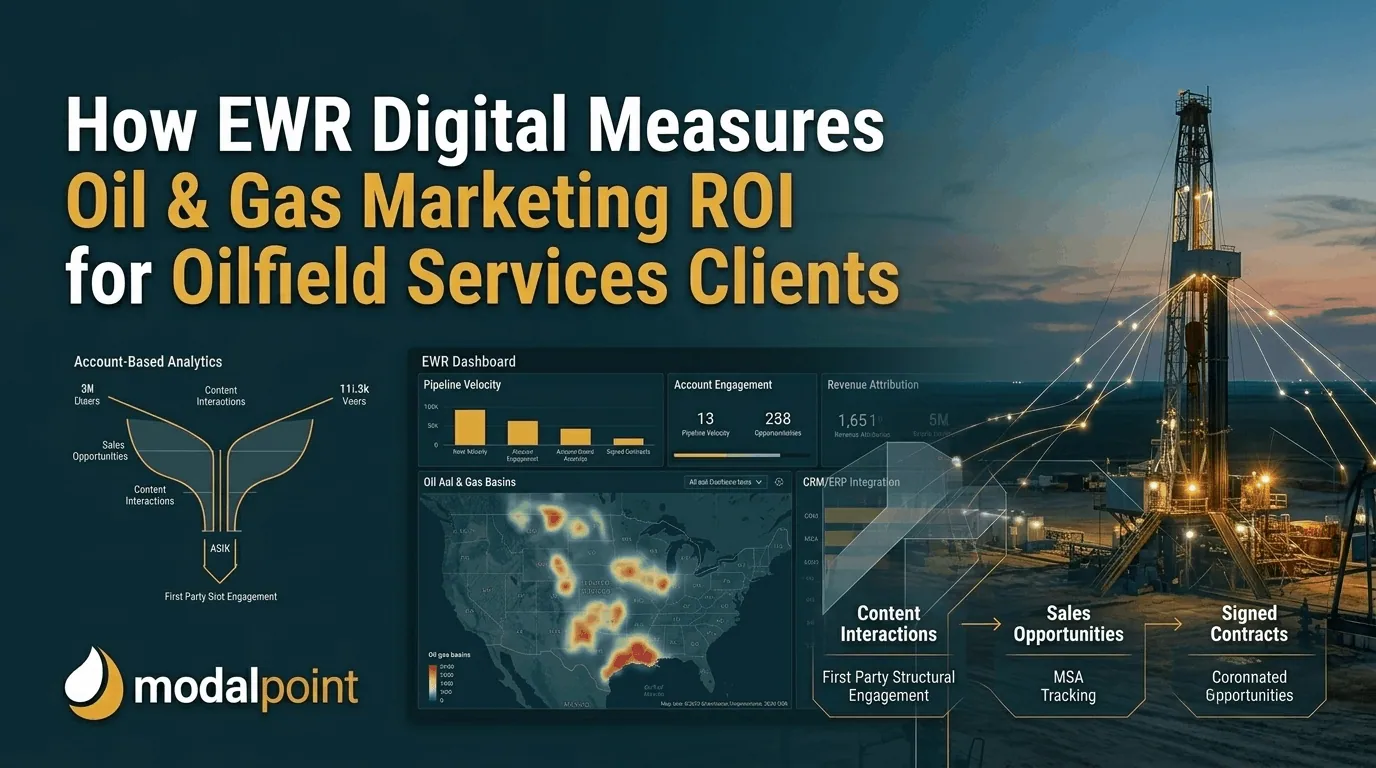
Quantifying the direct financial impact of modern industrial positioning is one of the most persistent operational hurdles facing energy executives today. For decades, multi-million dollar supply chain agreements were executed almost exclusively through legacy networks, physical trade exhibitions, and localized regional relationships. However, as procurement departments centralize their vendor evaluation processes, understanding how to track and optimize your oilfield services marketing ROI has transformed from an isolated administrative task into a core competitive mandate.
Generalist corporate agencies routinely rely on top of funnel metrics like raw page views, social media impressions, and unverified form downloads to justify performance. In the heavy industrial sector, these superficial data points do not convert into long term field deployment. To unlock true growth, upstream, midstream, and downstream technology providers require an empirical evaluation framework that maps digital visibility directly to corporate capital allocation, contract renewals, and qualified sales opportunities.
The Technical Architecture of Industrial Attribution and Energy Sector Marketing Results
Capturing substantial market share in the modern energy corridor requires a deep transition away from subjective attribution models. High value B2B purchasing processes are non linear, frequently extending across multiple quarters and involving extensive technical evaluation boards. Attributing a massive capital expenditure contract to the final contact point overlooks the complex ecosystem of digital touchpoints that built the foundational authority required to close the deal.
To deliver unambiguous energy sector marketing results, the corporate measurement stack must combine multi touch digital attribution with account based engagement analytics. This tracking system allows service firms to see exactly when an operator technical lead, corporate compliance officer, or supply chain director interacts with a specialized white paper, field performance spreadsheet, or localized landing page. Measuring this multi tier engagement provides leadership with clear visibility into active commercial intent long before a formal request for proposal is published.
Replacing Vanity Metrics with Closed Loop Revenue Reconciliation
Vanity metrics are actively toxic to corporate budget optimization. An surge in broad web traffic means nothing if those visits originate from outside your primary target basins or from individuals without purchasing authority. Implementing a closed loop tracking pipeline involves integrating your public facing digital architecture directly with your internal enterprise resource planning (ERP) systems and customer relationship management (CRM) platforms, ensuring every single lead is tracked from initial lookup to signed contract.
“Industrial business leaders must abandon legacy tracking metrics and focus instead on comprehensive commercial analytics that directly link digital brand positioning to pipeline conversion and verifiable contract revenue.”
Analyze the deep mechanics of B2B tracking benchmarks on the Forbes Business Development Council Portal.
The EWR Digital Oil & Gas ROI Attribution Framework
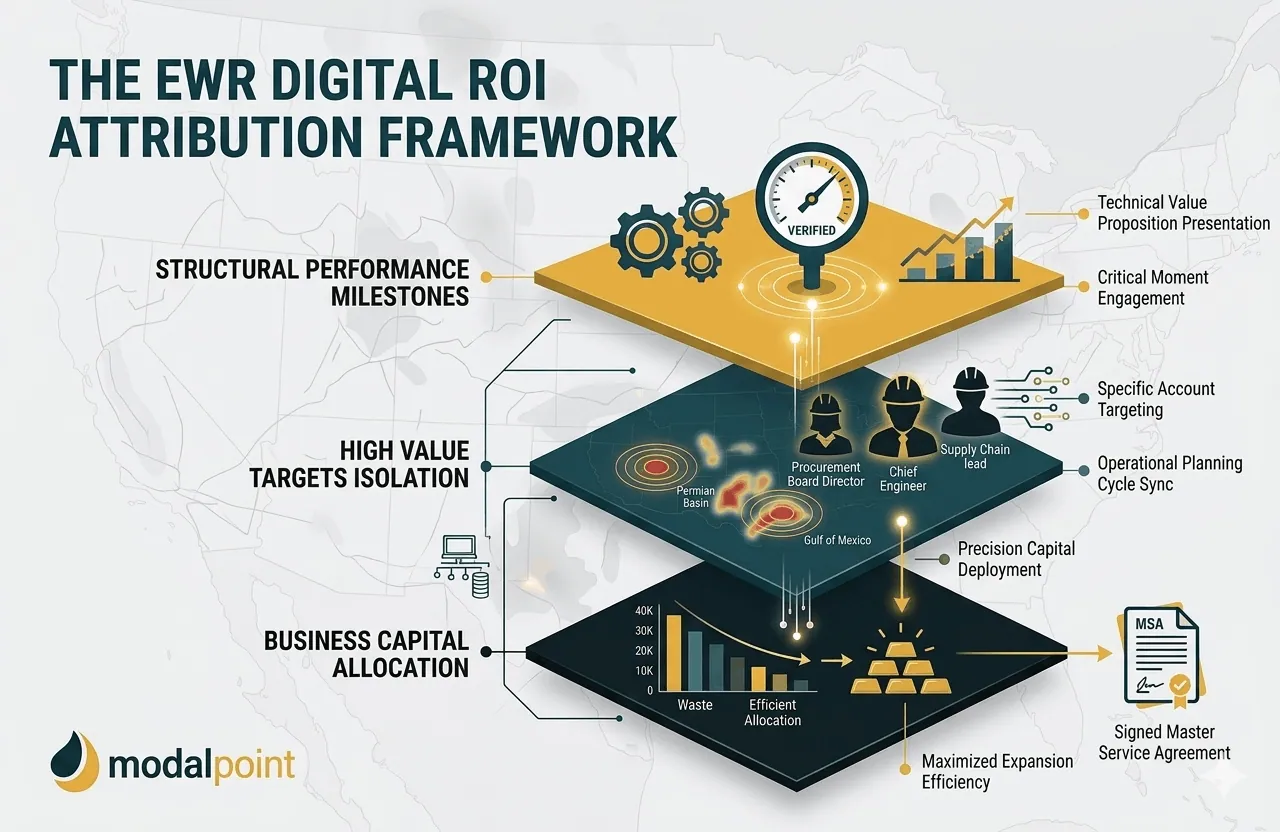
The specialized evaluation model developed throughout the history of our enterprise campaigns isolates the precise variables that move operator procurement boards. The EWR Digital oil & gas ROI methodology breaks down complex commercial data into distinct operational tiers, allowing service company boards to allocate their business capital with absolute precision.
By monitoring specific structural performance milestones, we strip the guesswork out of industrial expansion. This strict data verification ensures that your technical value propositions are systematically presented to high value targets during critical moments in their operational planning cycles.
The Three Tiers of Industrial Performance Verification
To maintain absolute transparency, industrial performance metrics must be categorized into three distinct operational layers:
- First Party Structural Engagement: Tracking deep technical content interactions, including the exact time specialized asset managers spend reading specific engineering studies or casing design documents.
- Account Based Pipeline Velocity: Measuring how effectively targeted operator groups advance through the qualification funnel, specifically focusing on the compression of the total sales cycle.
- Contract Sourced Revenue: The definitive financial layer that directly matches specific digital marketing investments to closed won field contracts and long term master service agreements.
Furthermore, your public technical documents must be fully optimized to match the rigid data requirements used by automated enterprise search systems. If your operational uptime data and specialized case studies are not organized according to modern semantic standards, your firm will remain completely invisible to modern industrial search frameworks. To gain a deep understanding of how to align your underlying corporate documentation with these automated ingestion layers, explore our definitive analysis on managing an oil & gas governance strategy.
The Operational Blueprint: Aligning Field Data with Financial Growth Metrics
Utilize the technical blueprint below to evaluate your current marketing measurement readiness and align your outward facing capabilities with the analytical standards utilized by corporate risk officers.
How does EWR Digital track marketing ROI for complex oilfield services?
We track ROI by deploying custom, first party tracking networks that connect web discovery touchpoints directly to internal CRM pipelines. This eliminates platform reporting bias and allows industrial firms to see how specific content pieces influence multi million dollar corporate procurement decisions across specific geographic basins.
Why do traditional B2B marketing metrics fail in the energy vertical?
Traditional B2B metrics fail because they treat all web interactions identically. In the energy sector, a single visit to an engineering schematic by a lead completion engineer at a major operator is worth more than ten thousand random visits from non industry personnel. Industrial tracking must focus on account identification and technical intent rather than raw volume.
| Performance Measurement Layer | Standard Agency Approach | EWR Digital Industrial Standard |
|---|---|---|
| Traffic Assessment | Tracks total monthly page views and general user numbers without filtering. | Isolates traffic exclusively by specific operator domain names and active drilling basins. |
| Lead Definition | Counts generic newsletter signups and basic website contact page form submissions. | Identifies verified buying groups and technical engineers pulling field spec sheets. |
| Attribution Mapping | Relies on simple last click attribution that ignores long cycle research phases. | Deploys multi touch tracking models that credit every step of the engineering lookup journey. |
Immediate Strategy Adjustments to Secure Complete Measurement Transparency
- Deploy Firmographic IP Filters: Implement advanced server side identification to unmask the corporate identities of anonymous website visitors, allowing your teams to see which operators are researching your tools.
- Unify Your Revenue Data Streams: Force a hard code integration between your digital lead capture systems and your sales team field pipelines to prevent valuable conversion data from slipping through departmental cracks.
- Publish Specialized Asset Calculators: Build high utility digital tools that allow prospective clients to calculate lease operating expense reductions using your specific hardware or software solutions.
Transforming Marketing Spend from an Expense into a Auditable Revenue Engine
The days of guessing which half of your advertising budget is working are officially over in the energy sector. Market authority is no longer built on corporate handshakes alone; it is won by the service providers who build an undeniable, data-backed presence where procurement teams actively research solutions. EWR Digital bridges the gap between field engineering and technical marketing, giving oilfield services clients an airtight attribution pipeline that justifies every single dollar spent. For a closer look at how we structure commercial positioning across every tier of the energy value chain, consult our deep dive into the oil & gas segments guide.
Every digital interaction is a chance to prove your operational value before a sales rep ever makes contact. If you are ready to eliminate vague agency assumptions, capture verifiable pipeline velocity, and ensure your industrial solutions are fully optimized for multi-million dollar supply chain selections, it is time to shift your commercial approach. Turn your complex field data into a powerful business generation ecosystem by building your next-generation marketing blueprint with ModalPoint.
Industrial Digital Integration Growth Statistic: According to the global B2B commercial trend analysis published by
McKinsey & Company, highly sophisticated, data-driven commercial teams that successfully blend personalized digital customer experiences with advanced analytical tracking frameworks are 1.7 times more likely to expand their total market share than traditional laggards.