AI Search Visibility Report: Oil & Gas in ChatGPT & Gemini

By Matthew Bertram | EWR Digital
The enterprise procurement landscape across the energy sector has fundamentally transformed. Upstream operators, midstream logistics providers, and downstream refiners are no longer relying exclusively on traditional search engine queries or standard sales outreach to identify technical partners. Today, enterprise buyers, procurement committees, and petroleum engineers leverage generative artificial intelligence platforms to evaluate vendor capability, compliance track records, and operational technology solutions. Understanding how your organization appears in these conversational models requires a focused strategy for digital information governance and generative engine optimization.
When engineering directors or supply chain leads query modern large language models (LLMs) about offshore equipment, subsea telemetry, or ESG software platforms, these models generate immediate recommendations based on synthesized web data. If your corporate assets, technical white papers, and digital citations are not properly structured, your enterprise risks remaining invisible during early-stage procurement research.
What Is AI Search Visibility in the Energy Sector?
AI search visibility represents the frequency, accuracy, and prominence with which a brand appears inside answers generated by AI platforms like OpenAI ChatGPT, Google Gemini, and Perplexity AI. Unlike traditional search engine optimization, which focuses on earning blue links on page one of Google, AI search visibility focuses on brand citation within synthesized summaries.
Definition: AI Search Visibility for Energy Enterprises
AI Search Visibility in the energy sector is the measure of how consistently generative engine models cite, recommend, and contextualize an oil and gas company or technology supplier when answering complex, intent-driven commercial queries.
To capture early intent, energy companies must adapt their digital presence. Establishing strong AI search visibility and oil & gas positioning ensures that when decision-makers ask for top subsea telemetry vendors or emissions monitoring software, your organization leads the generated summary.
How ChatGPT, Gemini, and Perplexity Process Oil & Gas Data
Each generative engine processes energy data through distinct architectural mechanisms. Recognizing these differences allows marketing leaders and executives to tailor content structure accordingly.
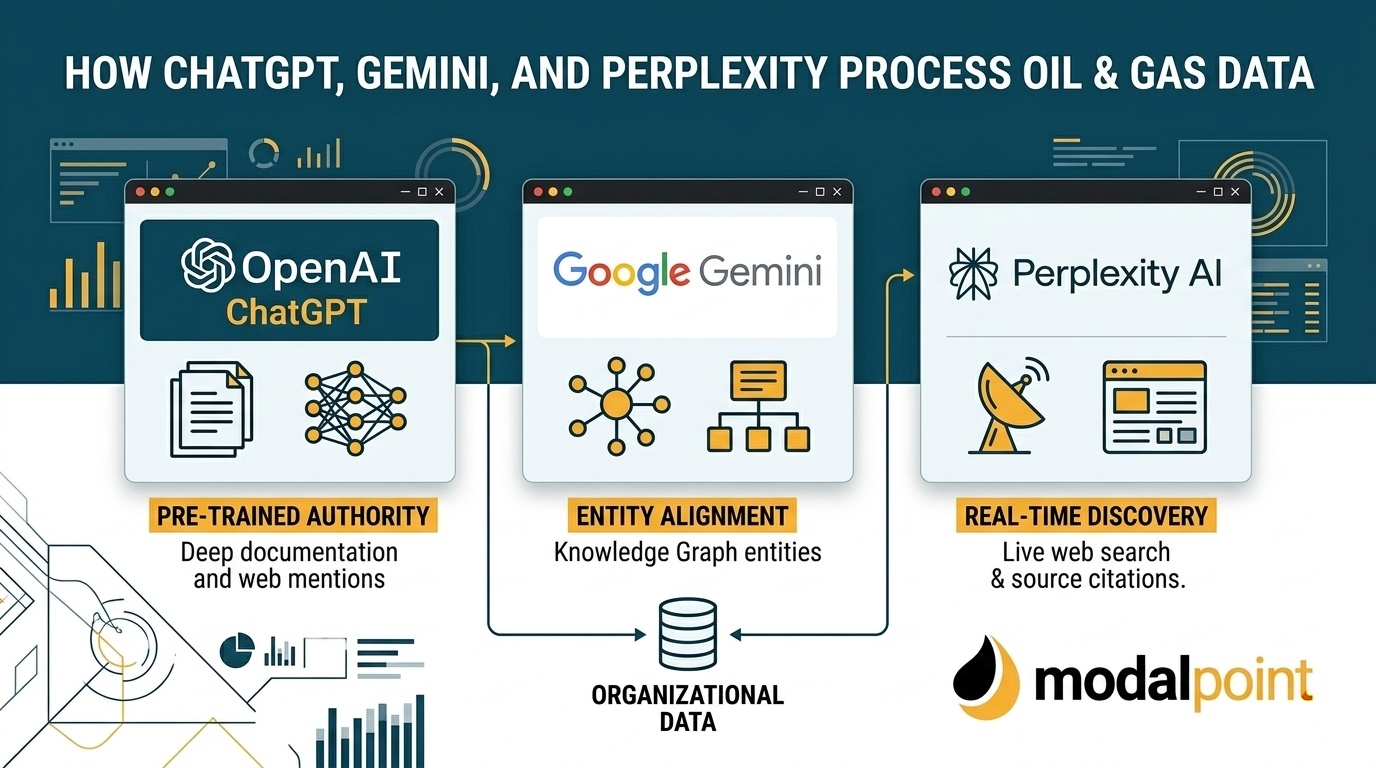
OpenAI ChatGPT Brand Visibility
ChatGPT relies heavily on extensive pre-training data combined with real-time web search capabilities. It prioritizes authority, deep technical documentation, and broad web mentions. Achieving strong ChatGPT brand visibility energy sector footprint requires authoritative third-party coverage, peer-reviewed industry white papers, and detailed product documentation that AI crawlers can index seamlessly.
Google Gemini and AI Overviews
Google Gemini powers both standalone conversational queries and Google AI Overviews on standard search engine results pages. Gemini synthesizes indexed web content using Google Knowledge Graph entities and authoritative structural schemas. For oil and gas brands, appearing in Google AI Overviews requires clear data hierarchies, concise technical explanations, and strict entity alignment.
Perplexity AI Real-Time Discovery
Perplexity functions as an answer engine that performs live web searches for every query, citing sources directly via footnote links. Conducting a successful Perplexity oil & gas search strategy requires fresh digital press releases, technical case studies, and indexable industry news feeds that provide clear, factual data points.
The Impact of Generative AI on Energy Procurement
Procurement committees in the energy industry are increasingly composed of digital-native professionals who prefer self-directed research over preliminary sales calls. According to modern B2B buying research, these stakeholders conduct extensive technical research behind closed doors before reaching out to sales representatives.
“Generative AI is fundamentally changing how decision-makers evaluate suppliers. In sectors with long sales cycles and large deal values, including oil and gas refining and energy distribution, more than 40 percent of decision-makers are actively deploying generative AI capabilities to streamline commercial research and vendor discovery.”
Because buyers consult AI engines during initial category discovery, missing out on generative visibility means being excluded from vendor shortlists before formal bidding processes even begin. Our AI Reputation Snapshot measures where your company stands in those answers today.
Key Factors Influencing AI Search Visibility for Energy Brands
To ensure AI platforms recognize your energy brand as a category leader, focus on three primary pillars of digital authority:
1. Entity Authority and Knowledge Graph Integration
Large language models recognize brands as entities within interconnected knowledge graphs. Standardizing corporate messaging across news platforms, industry directories, and official channels helps AI models understand your core competencies, service offerings, and operational locations.
2. Unstructured Data and Technical Content Depth
Generative AI engines thrive on detailed technical content. High-level marketing collateral is frequently overlooked in favor of comprehensive technical guides, engineering datasheets, regulatory compliance frameworks, and published field studies.
3. Digital Citations and Third-Party Mentions
AI models cross-verify claims by examining third-party publications. Trade journals, press releases, academic citations, and industry association publications serve as powerful verification signals for conversational AI models.
Frequently Asked Questions: AI Search Visibility in Oil & Gas
How does Generative Engine Optimization (GEO) differ from traditional SEO?
Traditional SEO focuses on optimizing web pages to rank for specific search keywords on search engine results pages. Generative Engine Optimization (GEO) focuses on structuring brand data, entity relationships, and authoritative content so conversational AI models synthesize and cite your brand as an expert answer.
Why are oil and gas buyers turning to AI search engines?
Energy procurement involves complex technical specifications, regulatory considerations, and multi-stakeholder evaluations. AI engines allow buyers to rapidly compare technical features, synthesize vendor reputation, and review compliance histories without navigating dozens of individual corporate websites.
How can energy brands track their visibility in ChatGPT and Gemini?
Energy brands can monitor their visibility by running structured prompt audits across target commercial queries, analyzing referral traffic from AI platforms in web analytics, and utilizing specialized AI visibility tracking tools that measure brand citation rates and sentiment.
Strengthening Energy Brand Visibility Across AI Engines
As conversational AI engines continue to handle a growing share of commercial research, energy sector executives must proactively manage their digital footprint. Structuring digital assets, maintaining clear entity data, and publishing authoritative technical content are essential steps toward securing market leadership in the AI-driven search era.
For strategic energy market insights and executive advisory services, leaders turn to ModalPoint to navigate complex industry transformations and accelerate commercial growth.
Key Industry Statistic:
According to Gartner research, 67% of B2B buyers prefer a sales-rep-free buying experience, with 45% actively utilizing generative AI tools during their purchase process to research vendors and evaluate solutions. Source: Gartner B2B Buyer Survey.