Interactive Energy Exhibits
Take apart a jack-up, a fixed platform, a semisubmersible, an FPSO, a pump jack, a cable-tool rig, an LNG plant and an AI data hall in your browser.
Four offshore structures, an oil pump jack, a wooden cable-tool rig, an LNG export plant and an AI data hall you can turn, take apart and cut open in your browser. We built them for the ModalPoint conference booth, traced them from public USPTO patent drawings, US government records and period engineering texts, and put them here so anyone can use them. They work on a phone. There is also one 2D journey, Follow one barrel, which traces a barrel of crude from a Permian lease to a Texas pump.
Every system on every exhibit has its own link. Send someone straight to the part you are talking about, and it opens there with a short explanation.
Jack-up rig
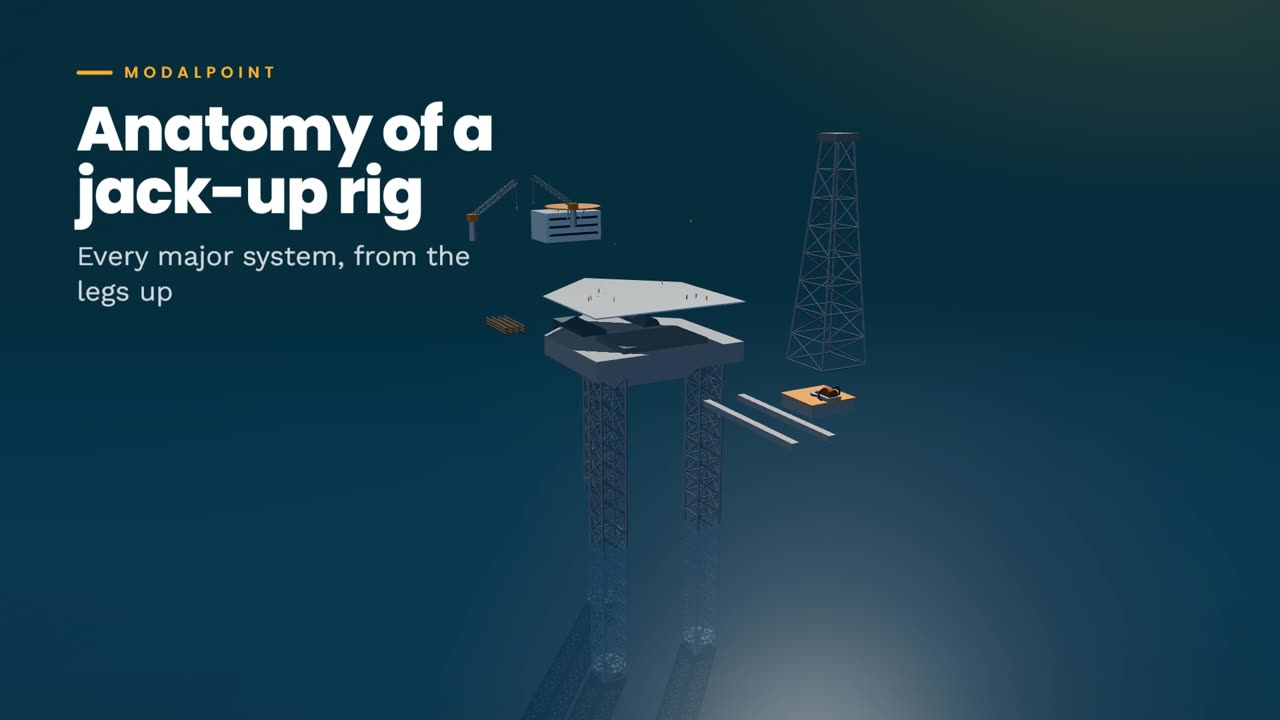
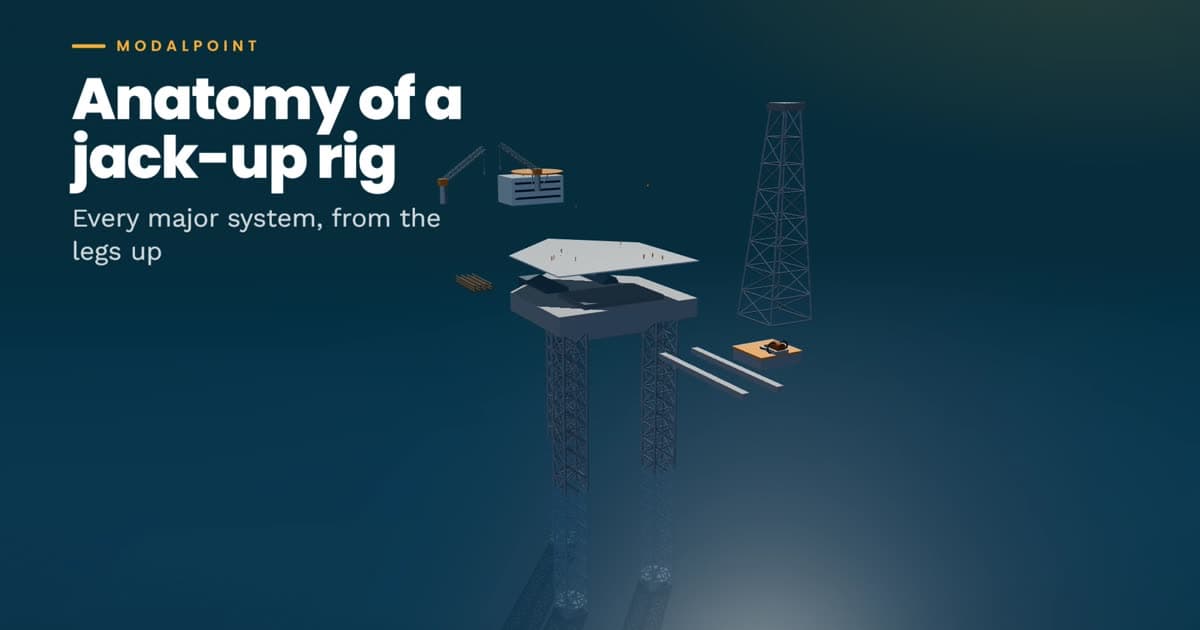
A cantilever jack-up: a drilling rig that is towed to location, lowers three legs to the seabed and climbs them until the hull is clear of the waves. The drilling package slides out over the edge on skid beams.
Take it apart yourself. Drag to turn it, pull it apart, open any system.
The full anatomy, with the 47 second video: Anatomy of a jack-up rig.
Go straight to a system:
- Drill floor
- Monkeyboard
- Derrick
- Cantilever skid beams
- Pipe rack
- Crane and lift zone
- Jacking house
- Open-truss leg
- Spudcan
- Main deck and walkways
- Accommodation block
- Helideck
Fixed platform
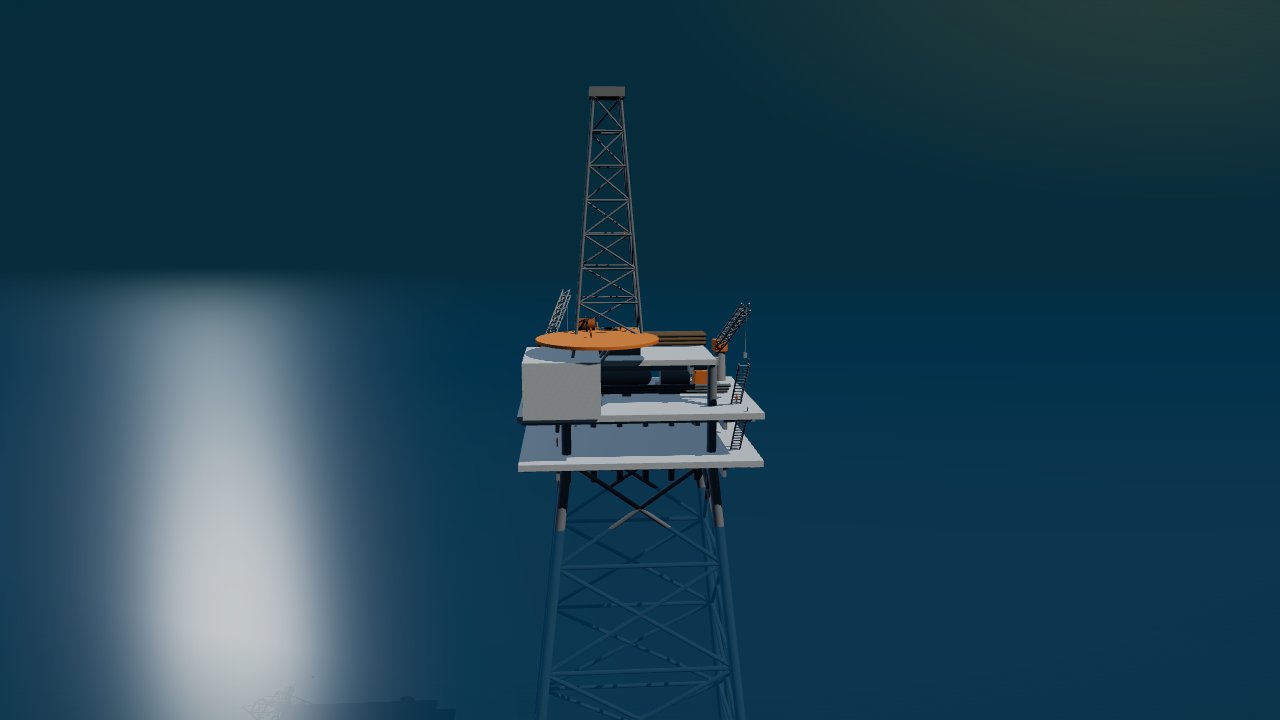
A four-leg fixed platform in about 300 ft of water: steel piles driven into the seabed, a braced jacket set over them, and three decks of drilling and production equipment on top. Unlike a rig, it never moves.
Take it apart yourself. Drag to turn it, pull it apart, open any system.
The full anatomy, with the 39 second video: Offshore oil platforms: types, anatomy and where AI fits.
Go straight to a system:
- Pile-to-leg connection
- Battered legs and bracing
- Mudline
- Export riser
- Wellheads and christmas trees
- Separation vessels
- Gas compression
- Process piping
- Drill floor
- Derrick and monkeyboard
- Stairs between decks
- Accommodation and helideck
Semisubmersible
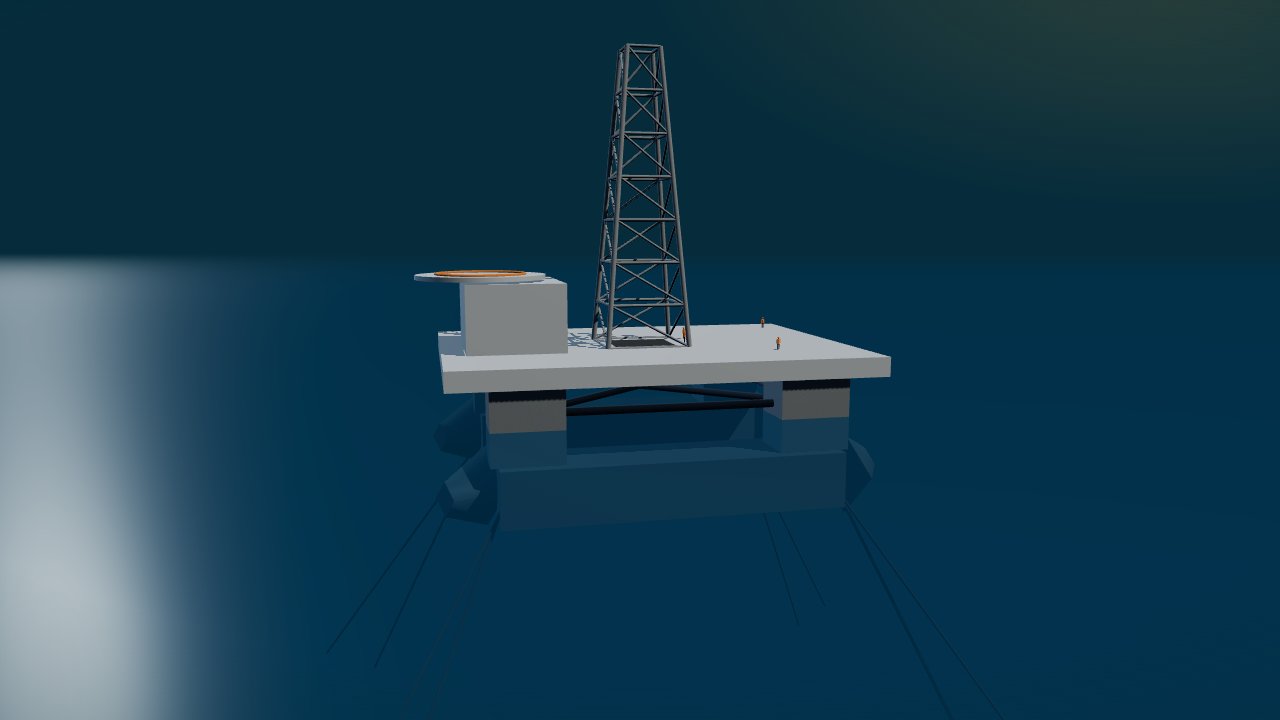
A column-stabilised semisubmersible: two pontoons ballasted below the waves, four columns, and a working platform held over the well by mooring lines. A drilling rig that floats.
Take it apart yourself. Drag to turn it, pull it apart, open any system.
Go straight to a system:
- Submerged pontoons
- Stabilising columns
- Where it meets the water
- Transit draft
- Ballast system
- Bracing between the hulls
- Station-keeping
- Air gap
- Moonpool
- Derrick and drill floor
- Working platform
- Quarters and helideck
FPSO
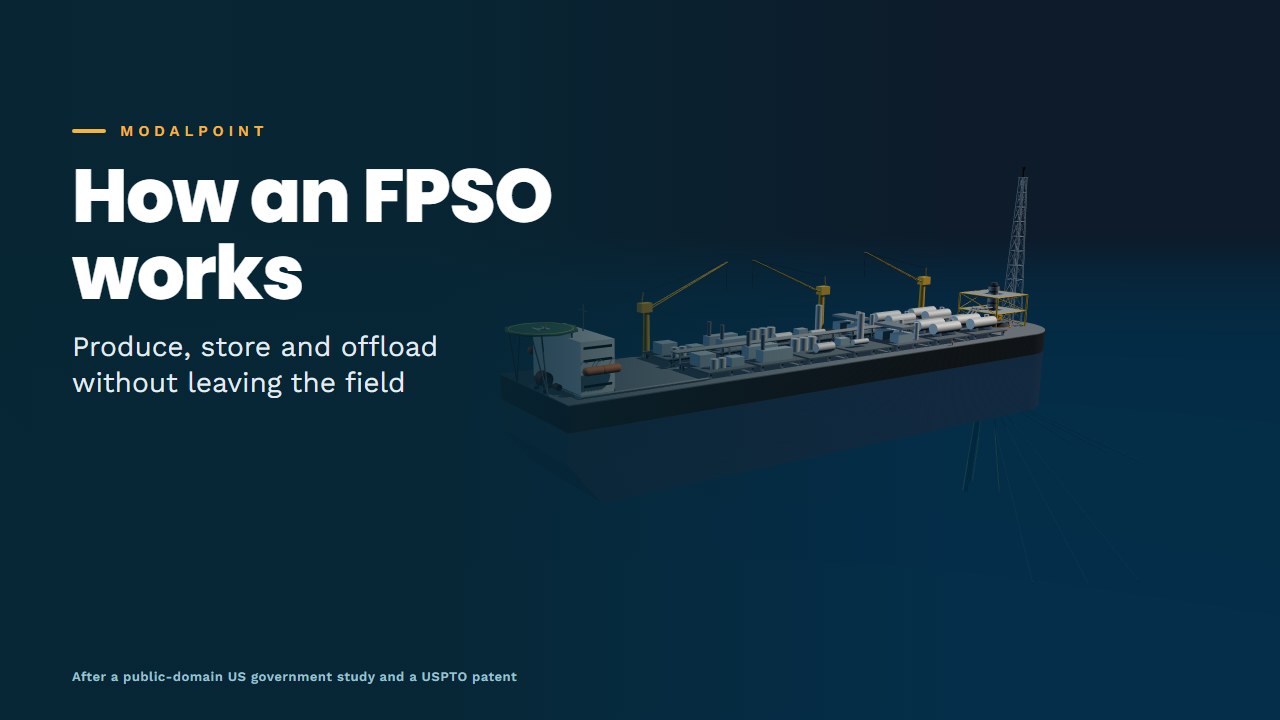
A turret-moored FPSO: a ship-shaped hull that stores a million barrels, a process plant on its deck, and an internal turret that holds the mooring lines and risers while the ship turns around it. Cut it open takes the starboard side away so you can see the tanks inside the two skins of the hull.
Take it apart yourself. Drag to turn it, pull it apart, cut the hull open.
The full walk through, with the 47 second video: What is an FPSO.
Go straight to a system:
- Ship-shaped hull
- Internal turret
- Mooring lines
- Risers and umbilicals
- Swivel stack
- Process deck
- Flare tower
- Cargo tanks
- Double hull
- Two drafts
- Offloading at the stern
- Quarters, control room and helideck
AI data hall
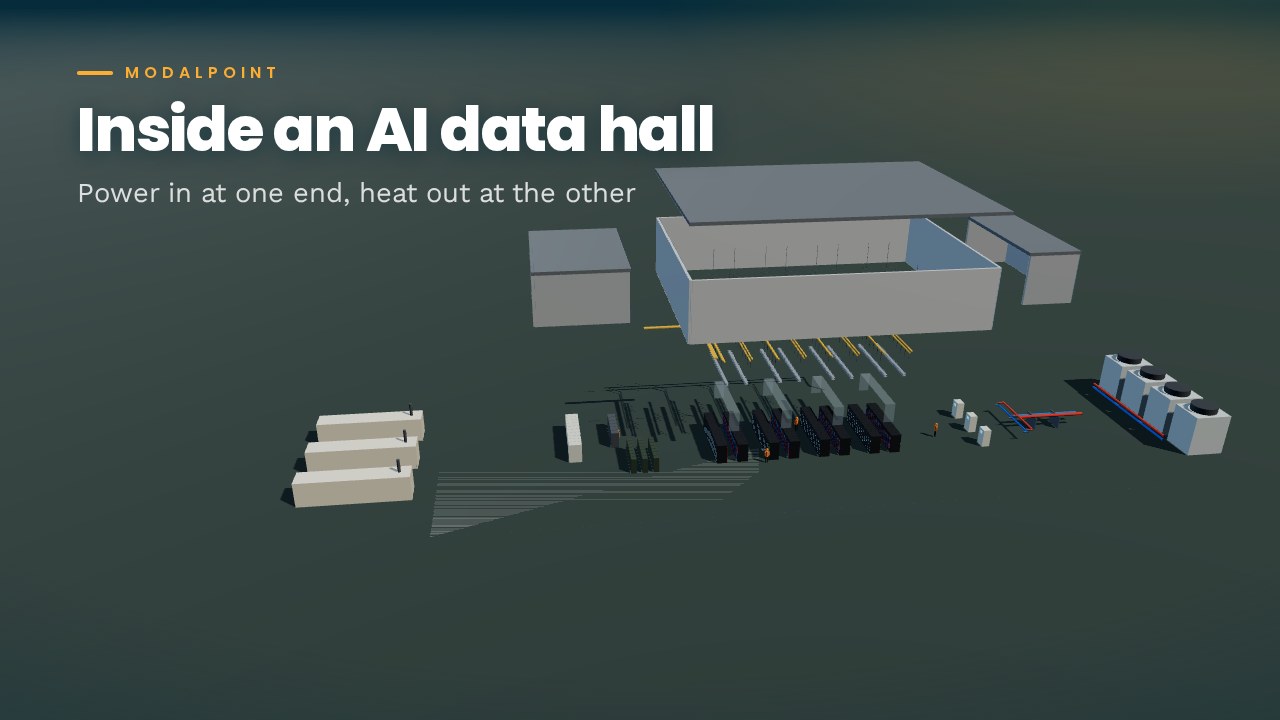
A liquid-cooled AI data hall: backup generators, switchgear and batteries at one end, four pods of GPU racks with power and network overhead, and coolant piped out to cooling towers at the other. Data centers are about nine in ten of the large loads asking to join the Texas grid (ERCOT, June 2026).
Take it apart yourself. Drag to turn it, pull it apart, open a GPU rack.
The full anatomy, with the 49 second video: Anatomy of an AI data hall.
Go straight to a system:
- The data hall
- Liquid-cooled GPU rack
- Cold plates
- Hot-aisle containment
- A and B power overhead
- Cable trays
- Coolant distribution units
- Cooling towers
- UPS and batteries
- Switchgear
- Backup generators
- Power in, heat out
Oil pump jack
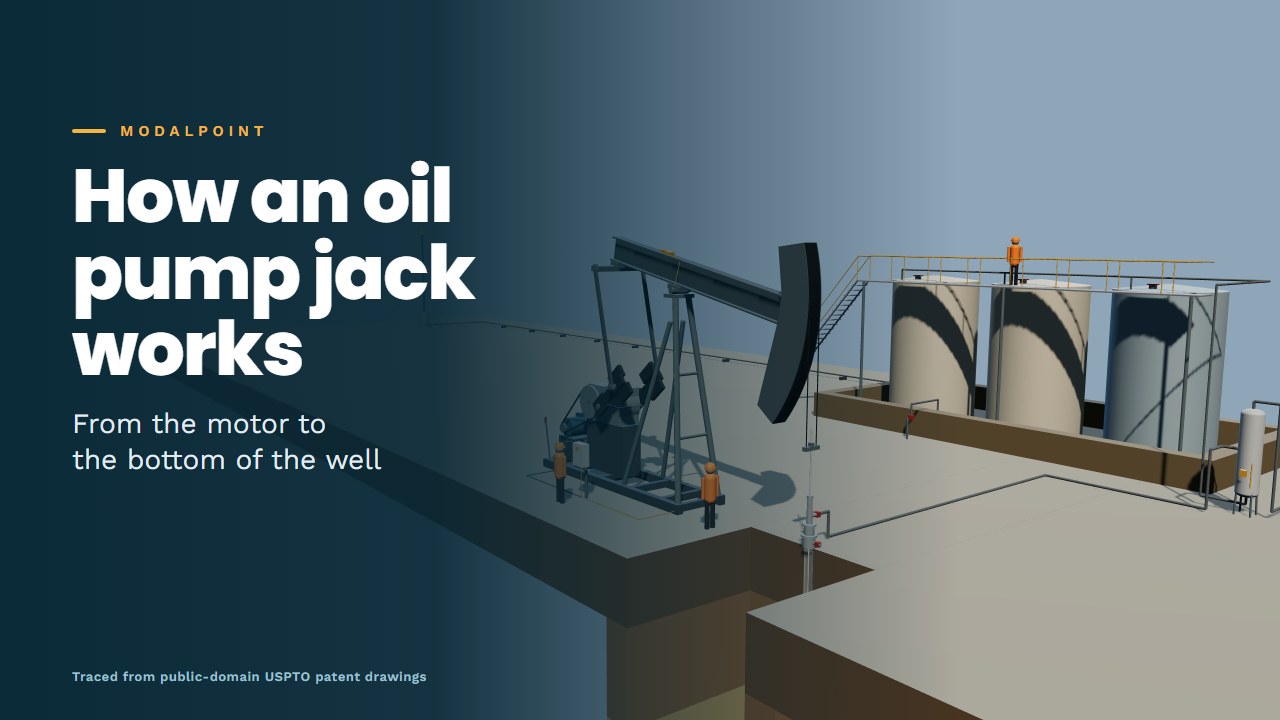
An oil pump jack on a single well pad: the motor, gearbox, cranks and walking beam, the rods moving inside the well, and the separator, tanks and flare the well produces into. It keeps pumping while you look, and Cut it open takes the ground away so you can watch the rods move.
Take it apart yourself. Drag to turn it, pull it apart, cut the ground away.
The full walk through, with the 47 second video: How an oil pump jack works.
Go straight to a system:
- Beam pumping unit
- Horsehead and bridle
- Walking beam and Samson post
- Gearbox, cranks and counterweights
- Motor, belts and brake
- Pump-off controller
- Wellhead
- Casing, tubing and rods
- The pump at the bottom
- Separator
- Tank battery
- Flare
Cable-tool oil rig
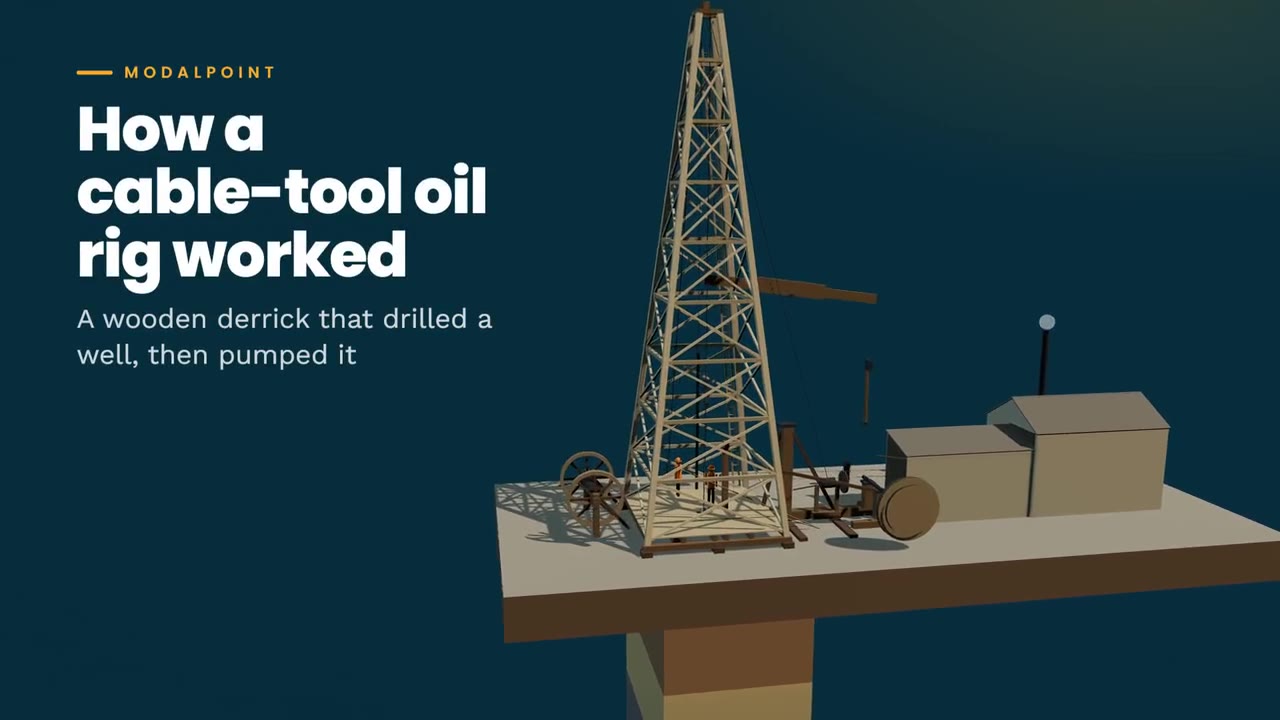
A wooden cable-tool rig of the 1880s to 1920s: the derrick, the walking beam on its samson post, the band wheel and steam engine that drove it, and the string of tools it dropped on the rock. The beam rocks while you look, Cut it open shows the tools at the bottom of the hole, and Show it pumping turns the rig into the well it drilled.
Take it apart yourself. Drag to turn it, pull it apart, switch it from drilling to pumping.
The full walk through, with the 47 second video: How a cable-tool oil rig worked.
Go straight to a part:
- Wooden derrick
- Walking beam and samson post
- Band wheel and crank
- Pitman and jack posts
- Steam engine and telegraph
- Boiler
- Bull wheels and cable
- Crown pulley
- Temper screw
- String of tools
- Sand reel and bailer
- Pumping on the beam
LNG export plant
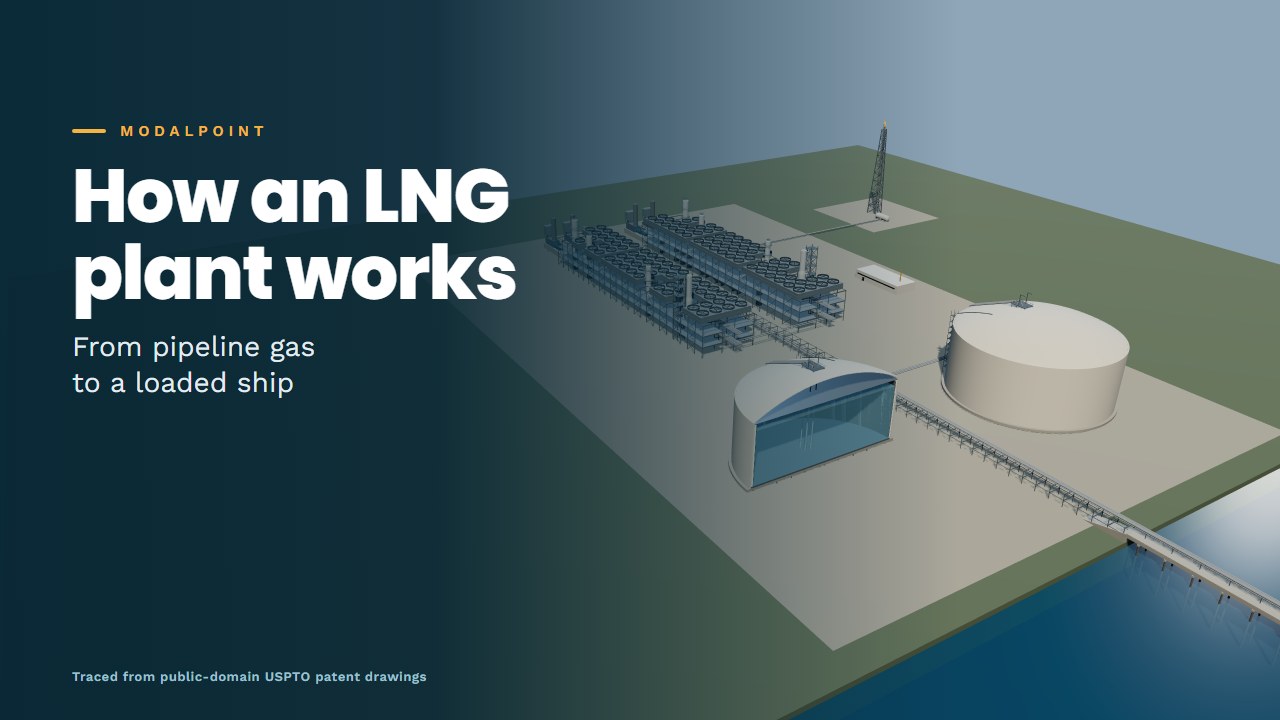
An LNG export terminal: two liquefaction trains that clean pipeline gas and chill it to about minus 162 °C, two full-containment tanks, and the jetty, loading arms and carrier the LNG leaves on. The fans on the air coolers turn while you look, and Cut it open takes half of one tank away so you can see the layers that hold the liquid.
Take it apart yourself. Drag to turn it, pull it apart, cut a tank open.
The full walk through, with the 47 second video: How an LNG plant works.
Go straight to a system:
- A liquefaction train
- Gas treatment
- Dryers and mercury guard
- Propane precooling
- Main cryogenic heat exchanger
- Refrigerant compressors
- Air coolers
- Full-containment tank
- Transfer lines
- Loading arms
- Berth and dolphins
- LNG carrier
- Flare
- Control room
Follow one barrel
The one exhibit you scroll instead of turn. It follows a single barrel of West Texas crude through ten stages, from the lease where the rights are signed to the pump where it is sold as gasoline, and counts the jobs, the days and the value per gallon added at each. Every figure on it links to its source.
Scroll it yourself. Each stage draws as you read, and the last one splits your own fill-up four ways.
Where the models come from
Each model is traced from published sources, almost all of them figures in US patents: US 6,481,931 and US 8,911,179 for the jack-up; US 4,669,918, US 6,644,893 and US 3,852,969 for the fixed platform; US 4,232,625 for the semisubmersible; US 6,564,740 for the FPSO's turret, with its hull, tanks and drafts from the US government study MMS 2000-090; US 8,514,572, US 9,615,488, US 11,602,070, US 9,166,390, US 12,200,913, US 12,127,372, US 7,278,273 for the data hall; US 10,815,984, US 9,033,676, US 4,583,915, US 6,746,221, US 5,042,582, US 12,522,775 for the pump jack; US 9,726,326, US 2010/0154320, US 2023/0235954, US 3,763,658, US 2021/0348850, US 2014/0053599, US 11,293,698, US 11,879,687, US 11,105,553, US 5,697,312, US 5,727,492, US 3,805,834, US 3,547,153 for the LNG plant; and for the cable-tool rig, the Oil Well Supply Company's 1884 catalogue, textbooks of 1913 to 1934, and the Historic American Engineering Record's survey of the David Renfrew rig. Each is a typical example of its type, not any specific rig, platform, vessel, facility, well, terminal or operator.
Why a decision intelligence company builds these
The big calls in this business are made about assets like these: where they work, what they are worth, who runs them, and what the systems on board are telling the people in charge. Those conversations go better when everyone in the room can see the whole structure, so we built it.
More and more of those systems will have AI watching them. We mapped eleven OT devices on a jack-up where AI fits, and where it has to stop, eight places on a pump jack pad, from the controller to the flare, eight places in an LNG plant, from gas treatment to the control room, and eight places on an FPSO, from the mooring lines to the offloading hose. The cable-tool rig shows the oldest form of the same question: a driller reading a bit he could not see, and a tour report that let someone else check his call. The same map across the whole value chain is in AI in oil and gas.
Selling to operators? If you make the automation, controls or software that runs on structures like this, the questions above are the ones your buyers are working through. ModalPoint helps OT and automation vendors take that conversation to market: positioning, the rooms that matter at the energy conferences, and the visibility that gets you onto the shortlist. See what we do.
Is there a structure you want to see taken apart? Tell us which one.
Talk to ModalPoint
A 30-minute call to see if ModalPoint is the right firm and whether the timing makes sense. No obligation either way.