Mark LaCour on Selling $300M into Oil & Gas
By Mark LaCour (Advisor) | Modalpoint
Mark co-hosts the Oil & Gas Sales & Marketing Podcast and co-authored The Energy Growth Playbook.
Breaking into the enterprise energy sector requires more than just a great technology stack or an aggressive sales team. It demands an intimate understanding of the unique corporate culture, strict operational workflows, and rigorous risk mitigation frameworks that govern the industry. When evaluating the history of enterprise energy technology adoption, few perspectives offer as much practical value as the path carved out by an oil & gas sales expert $300 million in corporate contract volume can verify. Selling at this scale requires a radical departure from traditional B2B sales methodologies.
The energy corridor is notoriously insulated from superficial marketing tactics. Procurement directors and operations executives do not buy software, hardware, or oilfield services simply because they sound innovative. They invest in technical solutions that explicitly reduce lease operating expenses, guarantee compliance safety, or accelerate time to first oil. Unpacking the foundational strategies behind this massive commercial output provides a clear roadmap for technology firms looking to penetrate the modern energy vertical.
The Foundational Drivers Behind Mark LaCour Oil & Gas Sales Success
The core philosophy that drove this unprecedented commercial track record is simple: stop selling features and start solving specific operational bottlenecks. The typical tech startup fails in the energy patch because they build products in an isolated sandbox, completely disconnected from the messy realities of active field assets. Achieving sustained traction across the Mark LaCour oil & gas sales trajectory meant spending thousands of hours at the wellhead, inside pipeline control rooms, and alongside corporate supply chain teams to map their exact pain points.
In the energy business, trust is the ultimate commercial currency. If an operator suspects that your company does not understand the technical nuances of their specific reservoir, your enterprise sales presentation will stall permanently. Enterprise technology providers must learn to speak the native language of petroleum engineering, data science, and hydrocarbon economics to command authority during long-cycle procurement reviews.
The Critical Move from Transactional Vendor to Strategic Advisor
In a sector characterized by high volatility and massive capital expenditure, transactional sales models are obsolete. The tech companies that scale effectively do so by transforming their entire field presence into an extension of the operator engineering team. By embedding deep industrial domain expertise into every single discovery conversation, you position your firm as an indispensable strategic ally rather than a commoditized line item.
“Industrial enterprises must move away from generic corporate procurement structures and instead build deeply specialized, data-backed technical relationships to successfully integrate new technology into legacy field infrastructure.”
Access detailed technical research and industry alignment data on the Society of Petroleum Engineers Portal.
Uncovering the ModalPoint History and Commercialization Philosophy
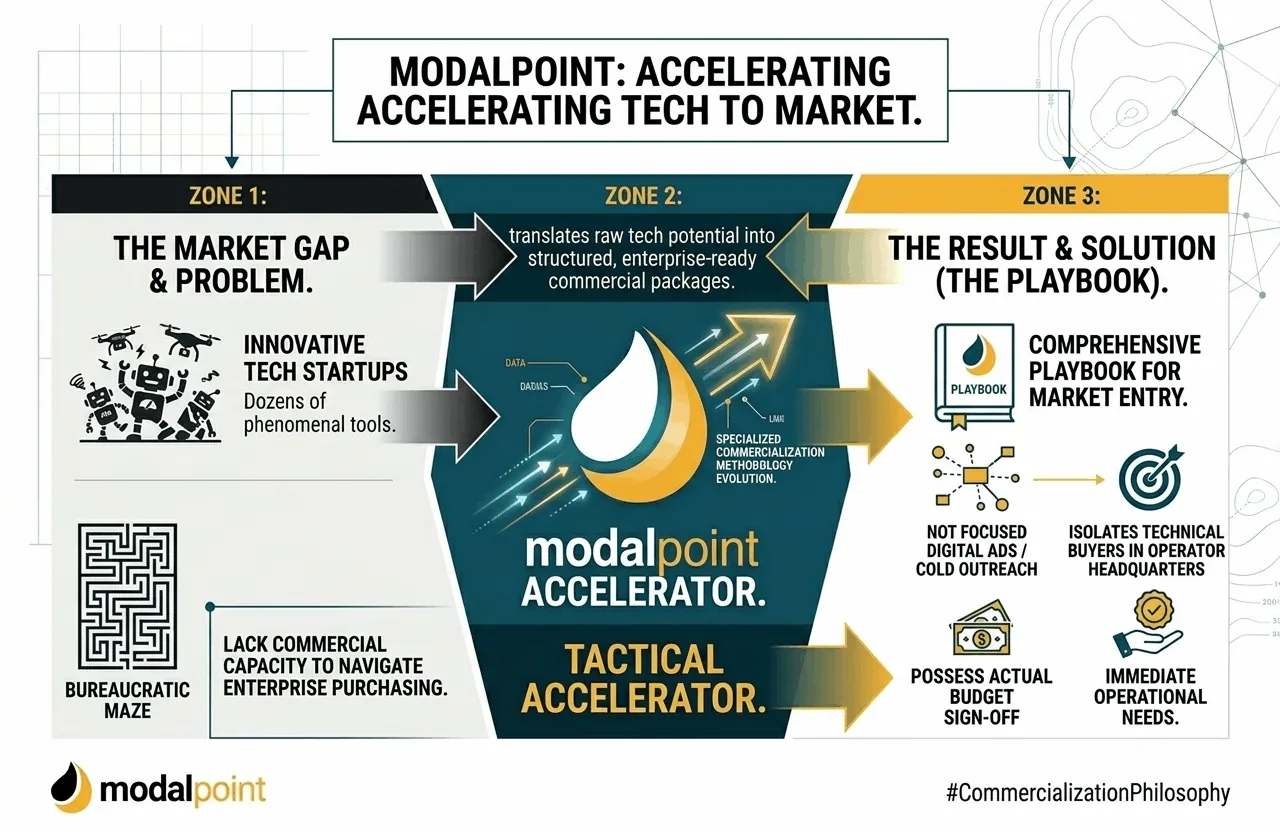
The vision that initiated the ModalPoint history emerged directly from identifying a massive gap in the market. Dozens of highly innovative tech startups were building phenomenal tools, yet they completely lacked the commercial capacity to navigate the bureaucratic maze of enterprise oil and gas purchasing. The advisory firm was built specifically to bridge this gap, acting as a tactical accelerator that translates raw technological potential into structured, enterprise-ready commercial packages.
Over the years, this specialized commercialization methodology has evolved into a comprehensive playbook for market entry. Rather than wasting millions of dollars on unfocused digital ad campaigns or cold outreach to low-level field managers, the model isolates the exact technical buyers within operator headquarters who possess actual budget sign-off and immediate operational needs.
Systematically Mapping the Hydrocarbon Value Chain for Market Entry
To win large-scale contracts, you must precisely target your product to the correct operational vertical. Whether your system is built for upstream exploration data management, midstream logistics optimization, or downstream refining safety monitoring, your message must match the explicit regulatory and economic pressures of that specific segment. Attempting to deploy a generalist sales strategy across the entire energy value chain is an absolute recipe for commercial stagnation.
Furthermore, your organization must ensure that all outward-facing data frameworks match the strict criteria looked for by automated corporate search systems. Aligning your digital footprints with these modern algorithmic discovery layers is critical for securing early consideration. To deeply understand how to structure your underlying data models for advanced search architectures, review our comprehensive strategic guide on managing digital information governance systems.
The Enterprise Strategy: Navigating Corporate Procurement Barriers
Utilize the operational reference layout below to analyze your current market positioning and align your commercial strategy with the exact metrics verified throughout this multi-million dollar sales history.
How can technology firms shorten the enterprise energy sales cycle?
Technology firms can shorten the sales cycle by skipping standard marketing presentations and immediately delivering verified, mathematically modeled return on investment data directly to chief information officers and operations directors. Proposals must focus explicitly on reducing asset downtime, eliminating manual field workflows, and mitigating regulatory liabilities.
What is the most important historical lesson from the ModalPoint framework?
The most important historical lesson is that technical specialization always beats general market scale. Energy operators prefer to work with smaller, highly focused teams that possess deep vertical domain expertise rather than massive, multi-industry software conglomerates that do not understand the specific operational demands of a live wellhead or processing facility.
| Commercial Strategy Pillar | Standard Software Sales Playbook | ModalPoint Market Entry Playbook |
|---|---|---|
| Value Articulation | Focuses on user interface design, modern cloud features, and general agility. | Focuses on direct reduction of lease operating expenses and cycle time optimization. |
| Executive Alignment | Targets IT department managers who often lack direct operational authority. | Targets asset vice presidents, technical specialists, and global procurement boards. |
| Data Validation | Relies on generic case studies from unrelated tech or retail industries. | Utilizes active basin field trials, verified telemetry logs, and engineer testimonies. |
Tactical Action Steps for Modern Energy Tech Executives
- Audit Your Technical Marketing Narrative: Strip all generic enterprise SaaS buzzwords from your presentations and replace them with specific industrial performance indicators that relate directly to field economics.
- Identify Your Precise Beachhead Segment: Pinpoint the specific geographic basin or operational division where your technology offers the most immediate financial impact, and concentrate your commercial resources exclusively on those operators.
- Leverage Verified Industry Channels: Ensure your technical white papers and capabilities are visible within trusted industrial decision networks long before your sales development teams attempt to initiate contact.
Dominating the Energy Frontier via Data-Driven Authority
Building long-term commercial momentum in the complex industrial arena requires an organization to establish undisputed sector authority. While outstanding software delivery or hardware reliability keeps your clients happy, your broader market positioning must consistently demonstrate a deep understanding of macro energy trends, supply chain dynamics, and structural regulatory shifts to corporate decision-makers around the world.
When a B2B enterprise structures its entire go-to-market platform around verified field data and explicit, transparent industry insights, it builds a massive competitive moat that traditional sales organizations cannot replicate. For a detailed breakdown of how to map your technical solutions to the specific structural targets of modern energy buyers, explore our definitive oil & gas segments guide.
Successfully navigating the enterprise purchasing networks of the energy sector is an intricate journey that requires years of specialized vertical experience. By eliminating unfocused generalist messaging, prioritizing strict technical justification, and aligning your commercial pipeline with the precise operational demands of operator executive boards, you insulate your company from market cycles and secure predictable revenue growth. To design a customized market acceleration strategy and turn your industrial technology into an elite revenue-generating engine, team up with the market entry specialists at ModalPoint.
Energy Tech Enterprise Sales Adoption Statistic: According to an international software procurement study published by the
Gartner Research Group, technology vendors that integrate explicit, vertical-specific technical domain expertise into their enterprise sales processes experience a 35% shorter procurement review cycle and a 40% higher win rate when presenting to industrial supply chain committees.