Oil & Gas Digital Information Governance Guide for 2027
By Matthew Bertram | ModalPoint
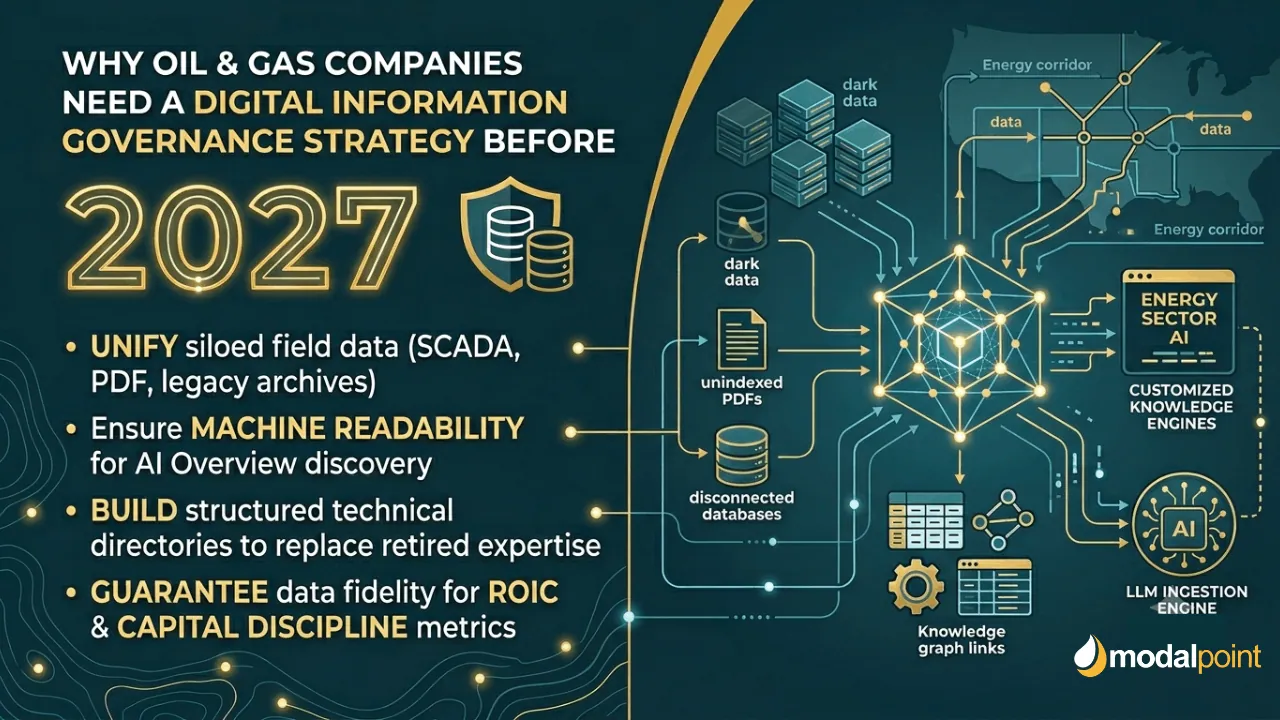
The global energy sector is on the precipice of a massive structural shift driven by advanced machine learning, automated compliance auditing, and generative search engines. As we approach 2027, the traditional methods of managing enterprise data within exploration, production, and distribution environments are no longer viable. To survive this shift, implementing a rigorous digital information governance framework is the definitive starting point for modern energy executives. Without structured, verified, and machine-readable data architectures, asset operators will find themselves completely invisible to the automated systems that now guide capital allocation and supply chain procurement. Corporate intelligence is transitioning away from static document storage into dynamic, AI-driven knowledge graphs. Legacy oilfield data formats such as unstructured PDF engineering schematics, unindexed SCADA logs, and siloed subsurface data repositories are actively hindering operational efficiency. Upstream, midstream, and downstream organizations must build a unified data foundation today to protect their market position and ensure compliance with emerging international data standards.The Convergence of Legacy Data and Energy Sector AI Ecosystems
For decades, the energy industry has generated petabytes of technical information across disparate field operations. However, a significant portion of this data remains categorized as dark data: unindexed, unformatted, and entirely inaccessible to enterprise analytics tools. As generative discovery models and customized Large Language Models (LLMs) become the primary tools for corporate research, the necessity of an enterprise-wide oil & gas governance strategy becomes an operational imperative rather than an IT afterthought. Artificial intelligence cannot synthesize unstructured chaos. When an enterprise engine attempts to parse non-standardized field data to optimize asset lifecycle management or evaluate carbon intensity metrics, it returns inaccurate or hallucinatory outputs. Establishing clean, semantically mapped data layers allows these advanced tools to seamlessly ingest corporate documentation, ensuring your technical capabilities are accurately recognized during automated vendor evaluations.The Realities of Machine Readability in Industrial Automation
Modern machine learning systems do not read web pages or corporate portals like human procurement managers do. They crawl underlying data architectures looking for explicit schema compliance, API accessibility, and clear structural hierarchies. If your technical specifications, safety protocols, and operational uptime records are buried inside non-scannable formats, your enterprise will be automatically excluded from automated vendor shortlists.“By establishing strict information governance, industrial organizations can unlock hidden efficiencies, reduce the cost of regulatory compliance, and prepare their legacy technical assets for integration into modern machine learning pipelines.” — Review the comprehensive data framework analysis on the International Organization for Standardization Portal.
How a Robust Data Framework Solves Content Silos and Mitigates Operational Risk
Data isolation is one of the greatest operational vulnerabilities in the energy corridor. Engineering teams use localized asset management software, logistics divisions maintain independent pipeline telemetry records, and corporate compliance teams track environmental metrics on separate spreadsheets. This fragmentation creates significant compliance risk and severely limits the capabilities of modern analytics tools. Deploying an updated oil & gas governance strategy eliminates these operational friction points by enforcing uniform data schemas across every department. This structural alignment ensures that critical business intelligence flows freely from the field edge directly to the executive suite, allowing for real-time adjustments to market fluctuations and regulatory updates.Protecting Corporate Intelligence Across the Hydrocarbon Lifecycle
Implementing a comprehensive information strategy ensures that institutional knowledge is permanently captured and standardized. As senior engineering personnel retire, their decades of operational expertise must not be lost. Transitioning this technical knowledge into structured, machine-accessible directories guarantees long-term operational continuity across all upstream, midstream, and downstream assets. Furthermore, structural compliance directly enhances your overall digital discovery potential. By organizing your public-facing technical papers, case studies, and compliance records according to modern semantic standards, you dramatically improve your opportunities for visibility within advanced AI search engines. To learn more about optimizing your technical positioning for these automated discovery interfaces, review our strategic insights on managing energy sector AI data ingestion protocols.The Technical Roadmap: Aligning Corporate Data for 2027 AI Discovery Engines
Use the following functional breakdown to evaluate your current data readiness and align your corporate information framework with the algorithmic requirements of modern industrial engines.What is a digital information governance strategy for oil and gas?
A digital information governance strategy in the energy sector is a comprehensive operational framework that defines how corporate and technical data is collected, standardized, secured, and stored. It ensures that all data points are machine-readable, compliant with global regulatory bodies, and optimized for ingestion by enterprise artificial intelligence networks.Why must energy companies optimize data frameworks before 2027?
Energy companies must optimize their data frameworks before 2027 because automated procurement systems, generative search engines, and compliance auditing algorithms are becoming the primary mechanisms for vendor evaluation and regulatory reporting. Unstructured or unindexed data will result in a total loss of digital visibility and market competitiveness.| Data Layer Requirement | Legacy Management Standard | 2027 Digital Governance Standard |
|---|---|---|
| File Formats | Unstructured, gated PDFs and non-indexed text files. | Clean HTML, structured JSON-LD schemas, and accessible APIs. |
| System Integration | Isolated departmental databases and disconnected software. | Unified enterprise data lakehouses with cross-platform semantic layers. |
| Search Visibility | Basic keyword optimization targeting standard web browsers. | High semantic density optimized for generative engine synthesis. |
Essential Operational Action Items for Energy Leadership
- Conduct an Enterprise Data Audit: Locate and categorize all dark data repositories across your operational segments, identifying high-value technical documentation that requires immediate standardization.
- Implement Unified Schema Markup: Apply specialized schema protocols to your public and internal digital documentation, making it easy for web scrapers and internal AI tools to identify key performance metrics.
- Establish Clear Access Control Protocols: Balance machine readability with absolute security by deploying advanced data governance tools that protect proprietary technical data while exposing public capabilities to discovery models.
Securing Market Leadership Through Data-Driven Authority
Achieving true market authority in the modern industrial landscape requires a dual approach that synthesizes rigorous technical architecture with strategic market execution. While your internal systems must be structured to feed advanced algorithmic models, your public commercial positioning must clearly communicate your operational capabilities to human stakeholders and procurement officers alike. When your corporate digital footprint is built on clean, verifiable, and structured data, your organization establishes a baseline of trust that traditional marketing strategies cannot duplicate. For information on building structured authority pathways across the broader energy ecosystem, you can analyze our deep dive into the four distinct oil & gas segments guide. Transitioning your corporate information into a high-performance business asset is a complex undertaking that requires specialized industry insight. By removing technical friction, eliminating informational silos, and aligning your digital architecture with the explicit requirements of modern search models, you insulate your company from market volatility and secure long-term commercial traction. To develop a customized commercialization strategy and prepare your enterprise for the operational realities of tomorrow, partner with the energy integration specialists at ModalPoint.Global Information Governance Statistics: According to an international data utilization study published by the International Energy Agency, organizations that implement comprehensive digital data standardization programs experience an average reduction of 15% in unplanned operational downtime and a significant acceleration in regulatory compliance approval timelines across major global basins.
Frequently Asked Questions
Why can AI systems not use most oil and gas technical data today?
A large share of industry data is dark data: unindexed, unformatted, and inaccessible to enterprise analytics tools. AI cannot synthesize unstructured chaos. When an engine parses non standardized field data to optimize asset lifecycle management or evaluate carbon intensity, it returns inaccurate or hallucinatory outputs. Clean, semantically mapped data layers are what let these tools ingest corporate documentation correctly.
How does an energy company become invisible to AI-driven procurement?
Machine learning systems do not read portals the way human procurement managers do. They crawl the underlying data architecture for schema compliance, API accessibility, and clear structural hierarchy. If technical specifications, safety protocols, and uptime records are buried in non scannable formats, the enterprise is automatically excluded from automated vendor shortlists.
What happens to institutional knowledge when senior engineers retire?
Without governance, decades of operational expertise are lost. A comprehensive information strategy captures and standardizes that knowledge, transitioning it into structured, machine accessible directories that guarantee long term operational continuity across upstream, midstream, and downstream assets.
What separates a 2027 governance standard from legacy data management?
Legacy management relies on unstructured gated PDFs, isolated departmental databases, and basic keyword optimization. The 2027 standard uses clean HTML with structured JSON-LD schemas and accessible APIs, unified enterprise data lakehouses with cross platform semantic layers, and high semantic density optimized for generative engine synthesis.